The Investigator’s Intelligence Toolkit: U.S. Edition
Plan it. Run it. Defend it.
A complete preparation-to-debrief system for suspect interviews, built on U.S. constitutional law.
Most interviews are won or lost before you walk into the room. Yet most investigators still plan on a legal pad, or not at all. The result is predictable: themes made up on the spot, evidence revealed in the wrong order, a denial you didn’t see coming, and an admission the defense spends a full day attacking at the suppression hearing.
The Investigator’s Intelligence Toolkit replaces guesswork with a structured, evidence-based process. You start with the raw case file and finish with a clear interview plan, a clean record in the room, and a statement with the best possible chance of holding up under a Miranda and voluntariness challenge.
Two routes: match the effort to the case
Not every case needs a full workup.
Quick File: four pages for straightforward cases such as petty theft, shoplifting, vandalism, simple assault or a probation violation. One double-sided sheet to plan at your desk, and one to take into the room.
Major Case: the full five-phase system for serious, complex or high-risk investigations.
If a simple case turns complicated partway through, switch to Major Case. Everything you’ve already typed carries over.
Type it once. It fills everywhere.
The case number, subject, evidence order, themes, opening statement and likely denial are linked across all 12 tools. Enter them once while planning, and they’re already on your In-Room Sheet when you sit down.
One sheet on the table
The two-sided In-Room Sheet is the only thing you bring in. It holds:
the 12 interview phases, with time codes, starting with Miranda warnings and the waiver
your planned evidence order, with a column for the subject’s response
a denial tracker
a voluntariness log (breaks, water, restroom, invocations)
the scripted voluntariness firewall
a STOP protocol for when the subject invokes silence or asks for an attorney
Built on U.S. law
Every legal step is mapped to the Supreme Court decisions that govern it:
Warnings and waiver: Miranda v. Arizona and Berghuis v. Thompkins
Invocation: Michigan v. Mosley, Edwards v. Arizona and Davis v. United States
The question-first technique: Missouri v. Seibert
Voluntariness: Colorado v. Connelly and Arizona v. Fulminante
Disclosure: Brady v. Maryland and Giglio v. United States
The toolkit flags where state law commonly adds requirements, such as mandatory recording, rules for juvenile interviews, and limits on deception, so you know what to confirm locally.
A dedicated “Write for the Stand” section shows you how to complete every sheet so it holds up when defense counsel reads it aloud in court.
What’s inside
Phase 1: Case Analysis
Investigative Blueprint: mine incident reports for timeline anchors, behavior and history
Interview Cue Extraction Checklist: 25 critical cues no case review should miss
Case File Preparation Checklists: file review, video timeline, injuries and contradictions
Phase 2: Strategy Design
Interview Intelligence Funnel: rank your evidence, forecast the denial, plan the opening
Guilty Knowledge Filter: lock down the non-public facts you’ll hold back
Theme Development Templates: identity, emotional and future-consequence themes, each tested against legal guardrails
Phase 3: Legal & Environment
Legal Reference Sheets: Miranda, the invocation rules, the Sixth Amendment, voluntariness and common pitfalls
Interview Room Setup & Positioning Guide: layout, a clean table and recording checks
Phase 4: In-Room Execution
Phase 5: Review & Debrief
Plus: a one-page Interview Day Quick Reference card, a glossary, and a step-by-step workflow guide.
Who it’s for
Detectives and criminal investigators
Patrol officers taking statements on their own cases
New investigators building good habits early
Sergeants and trainers who want a consistent standard across a unit
Campus, corporate and loss-prevention investigators
Format
58-page fillable PDF. Type directly into it in Adobe Acrobat Reader (free), or print it.
US Letter size, ready to print double-sided
Start each case by saving a fresh copy, so your blank master stays clean
Written by working police
Developed by Paul Clarke, a 23-year law enforcement veteran and field training officer. The interview method comes from his front-line experience. The legal content in this edition is built on U.S. Supreme Court law.
License
Single-user license: one investigator, unlimited cases. Team and agency licenses are available. Contact Code3Press.
This toolkit is an educational and organizational resource. It isn’t legal advice and doesn’t replace your agency’s policy, your state’s law, or the advice of your prosecutor or agency counsel. Confirm all legal points against your jurisdiction before use.
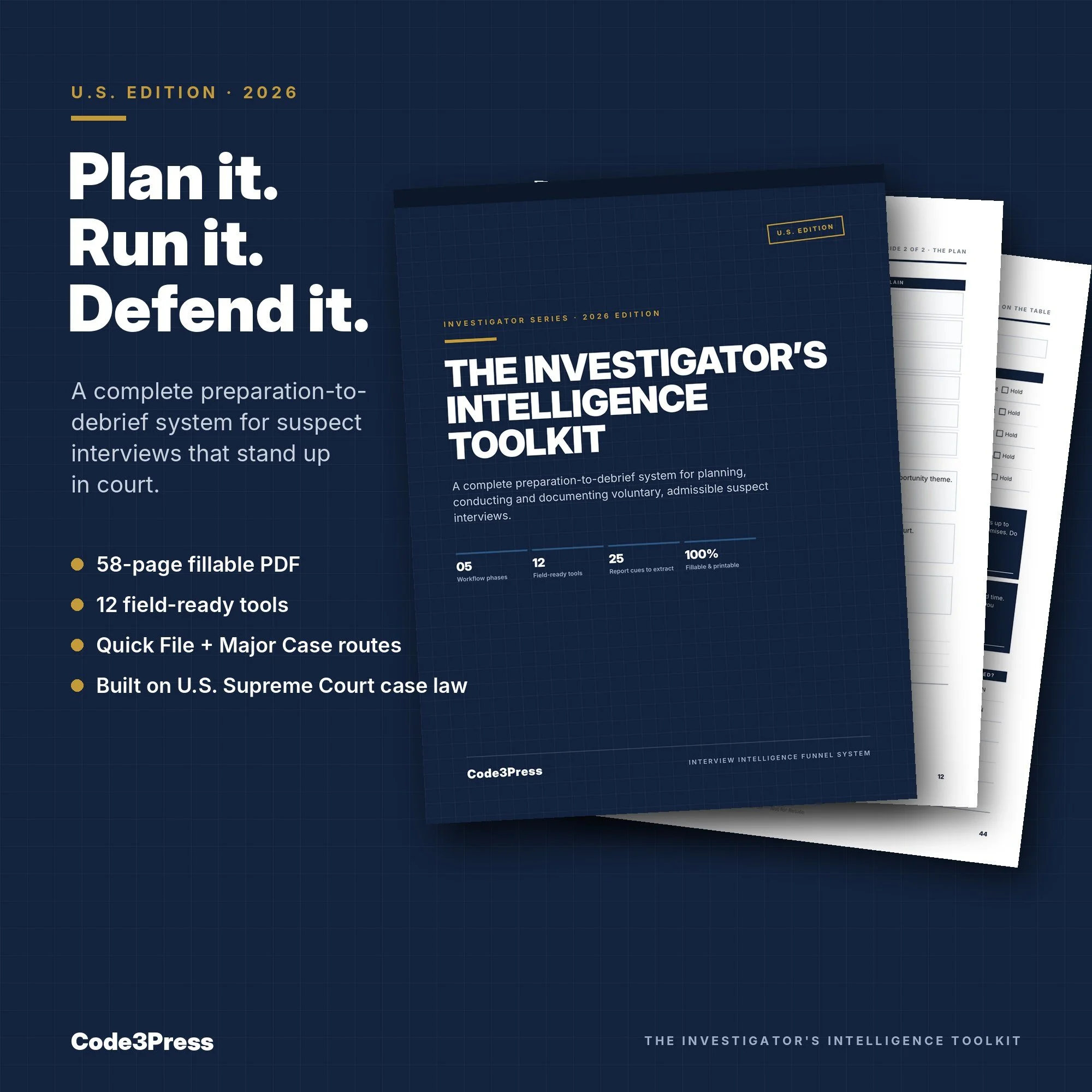 Image 1 of 7
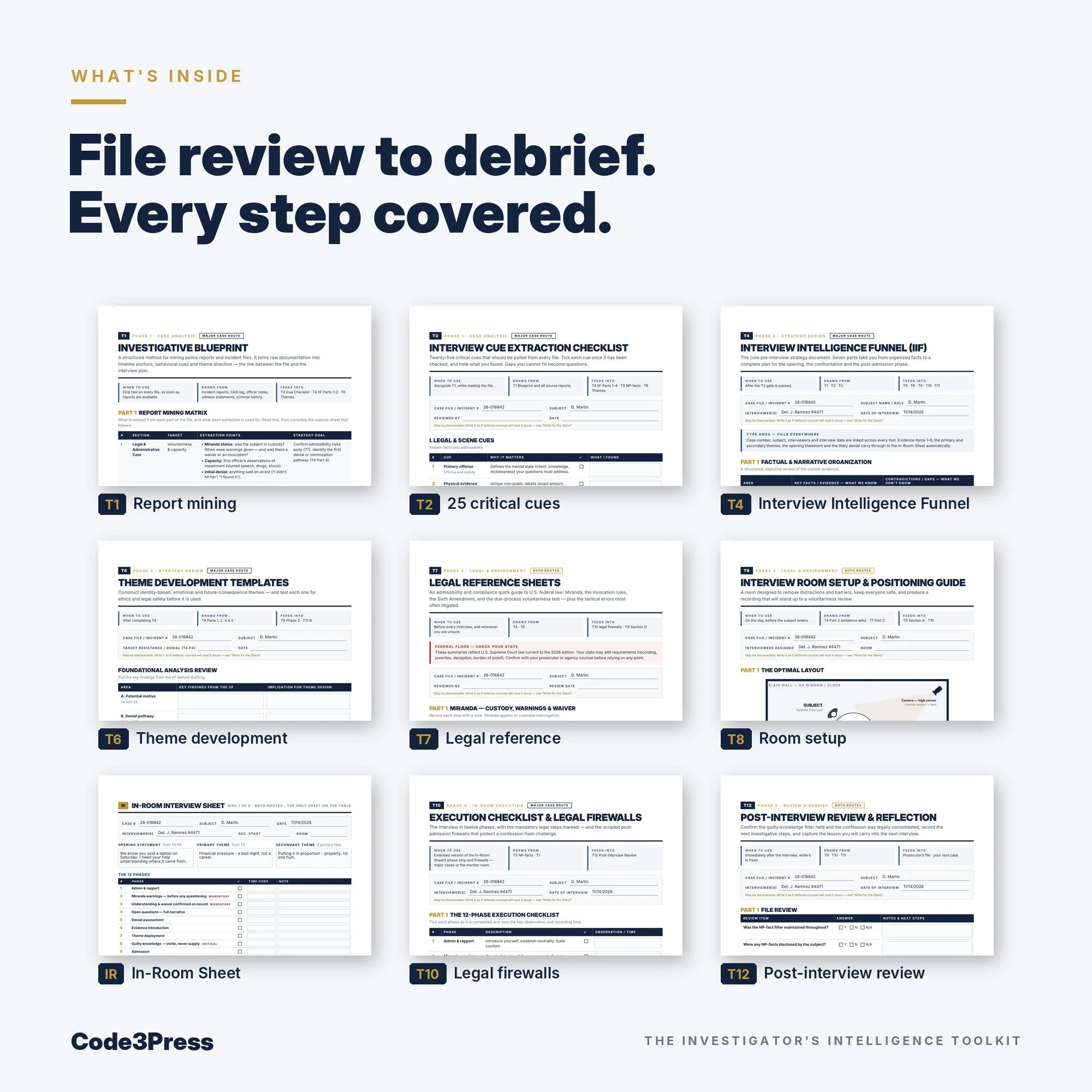 Image 2 of 7
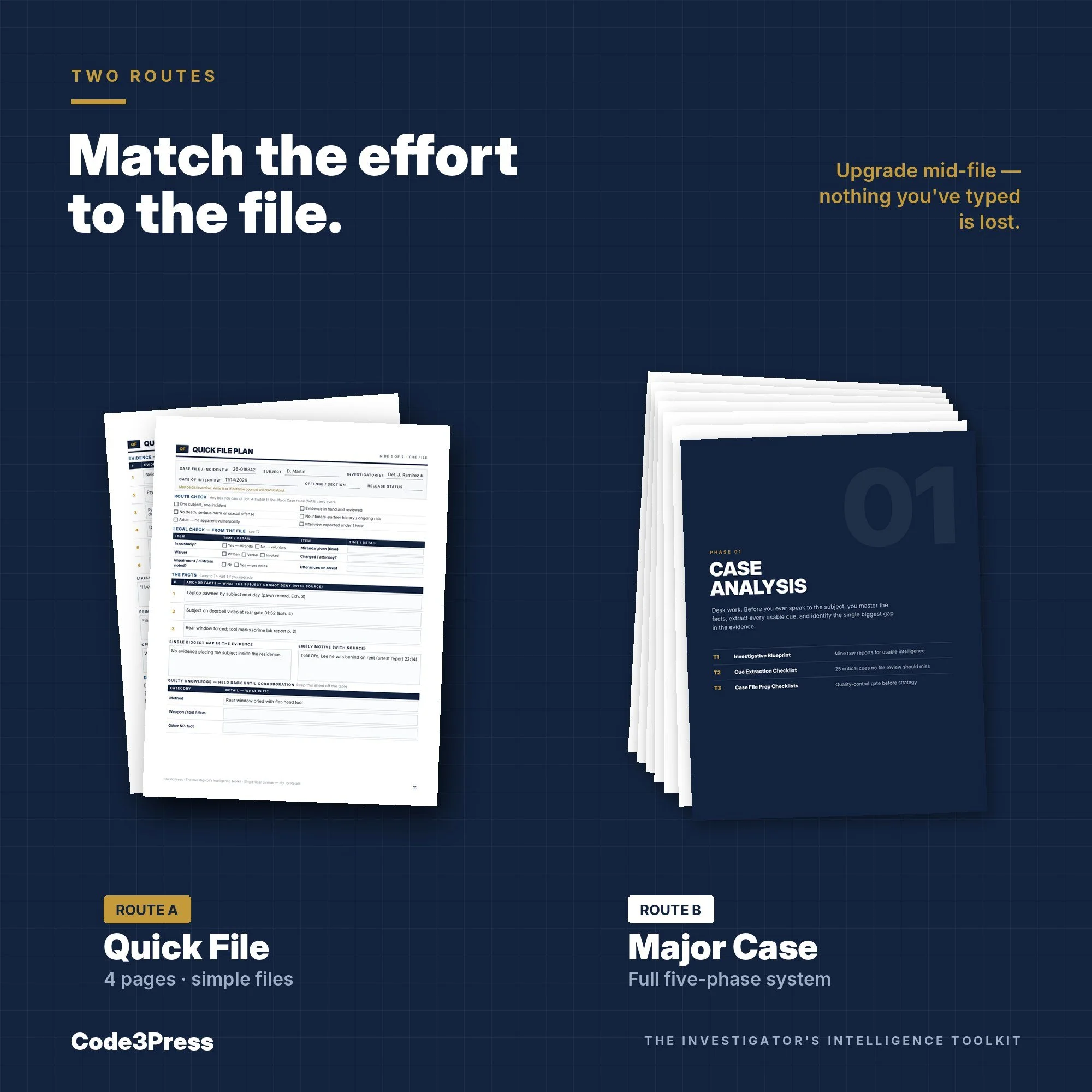 Image 3 of 7
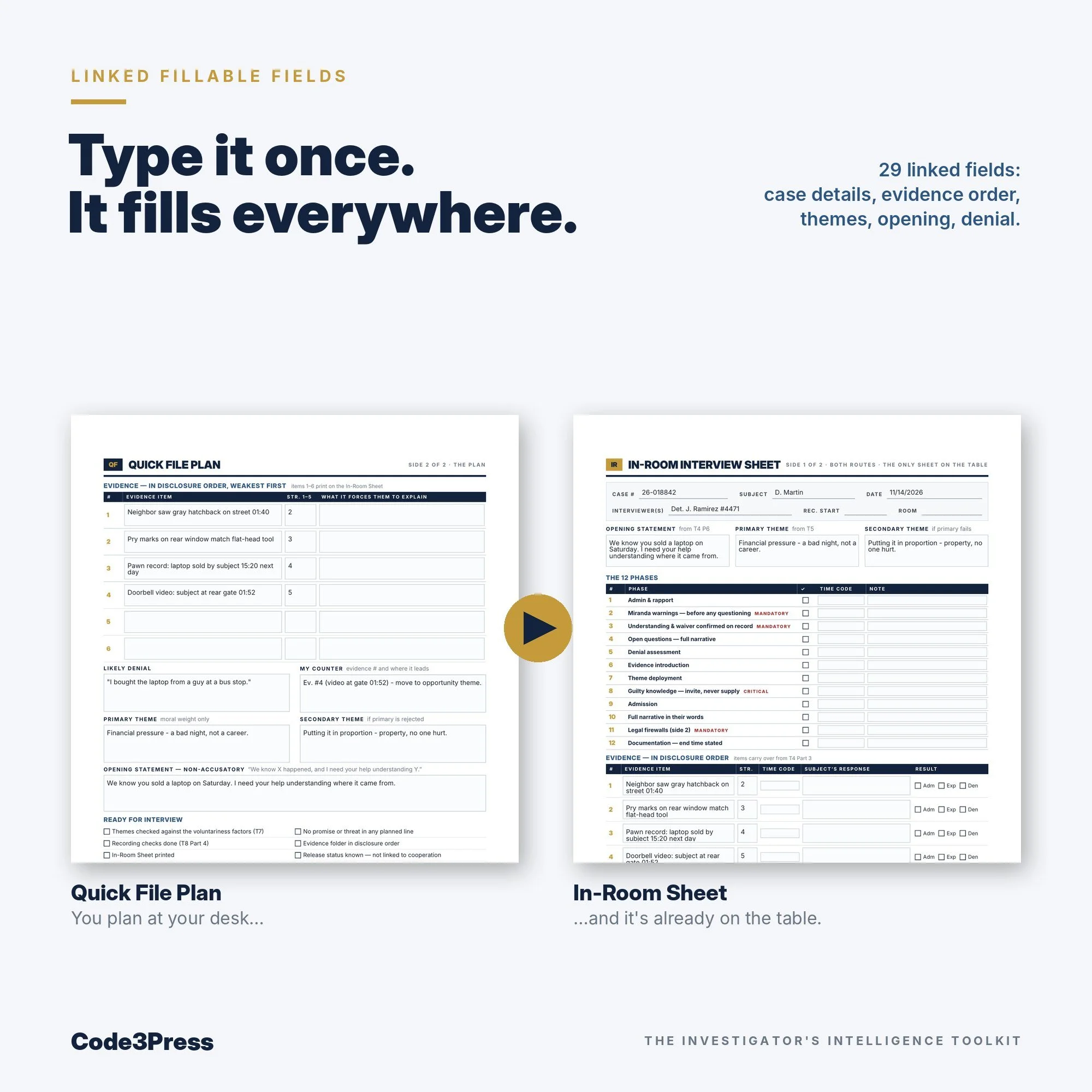 Image 4 of 7
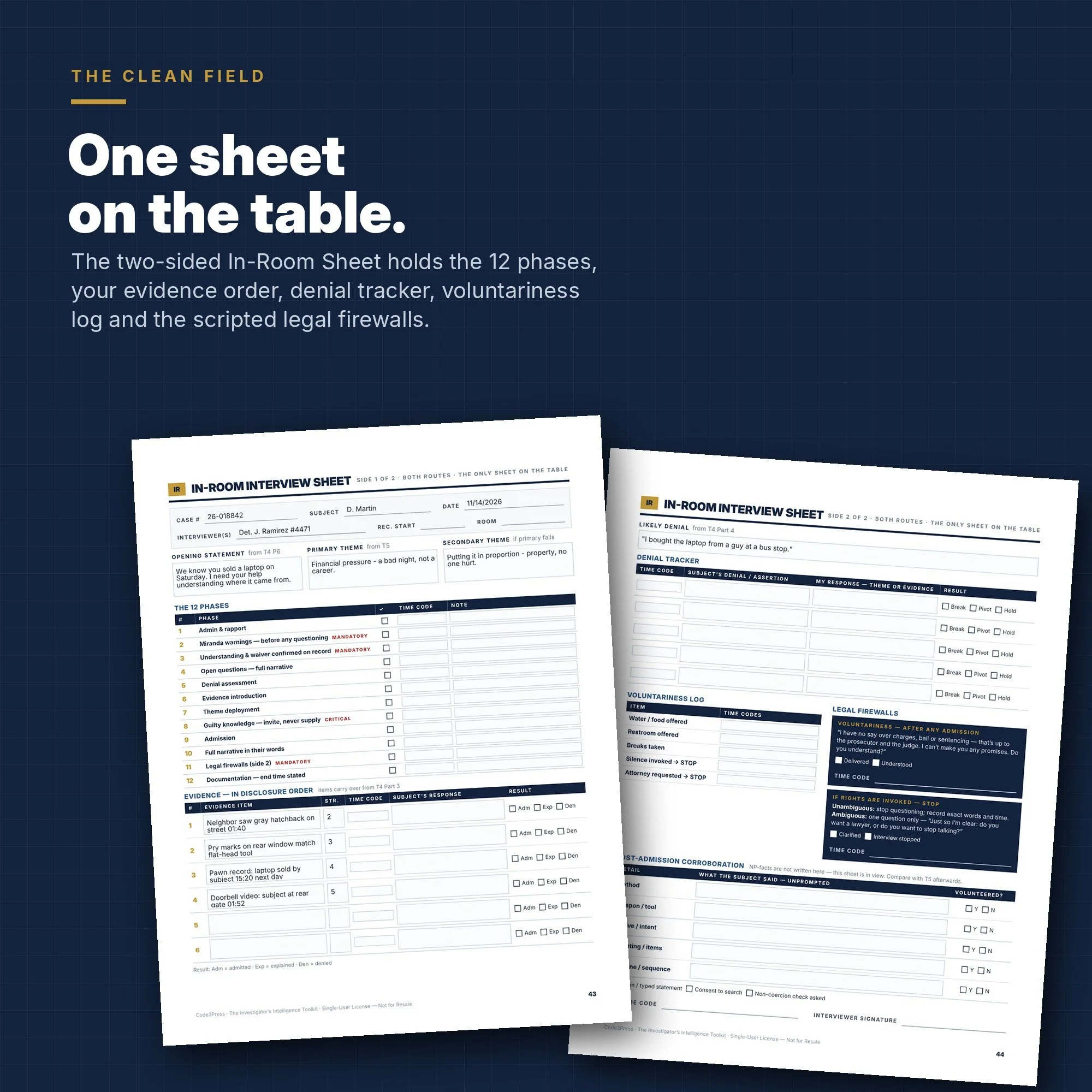 Image 5 of 7
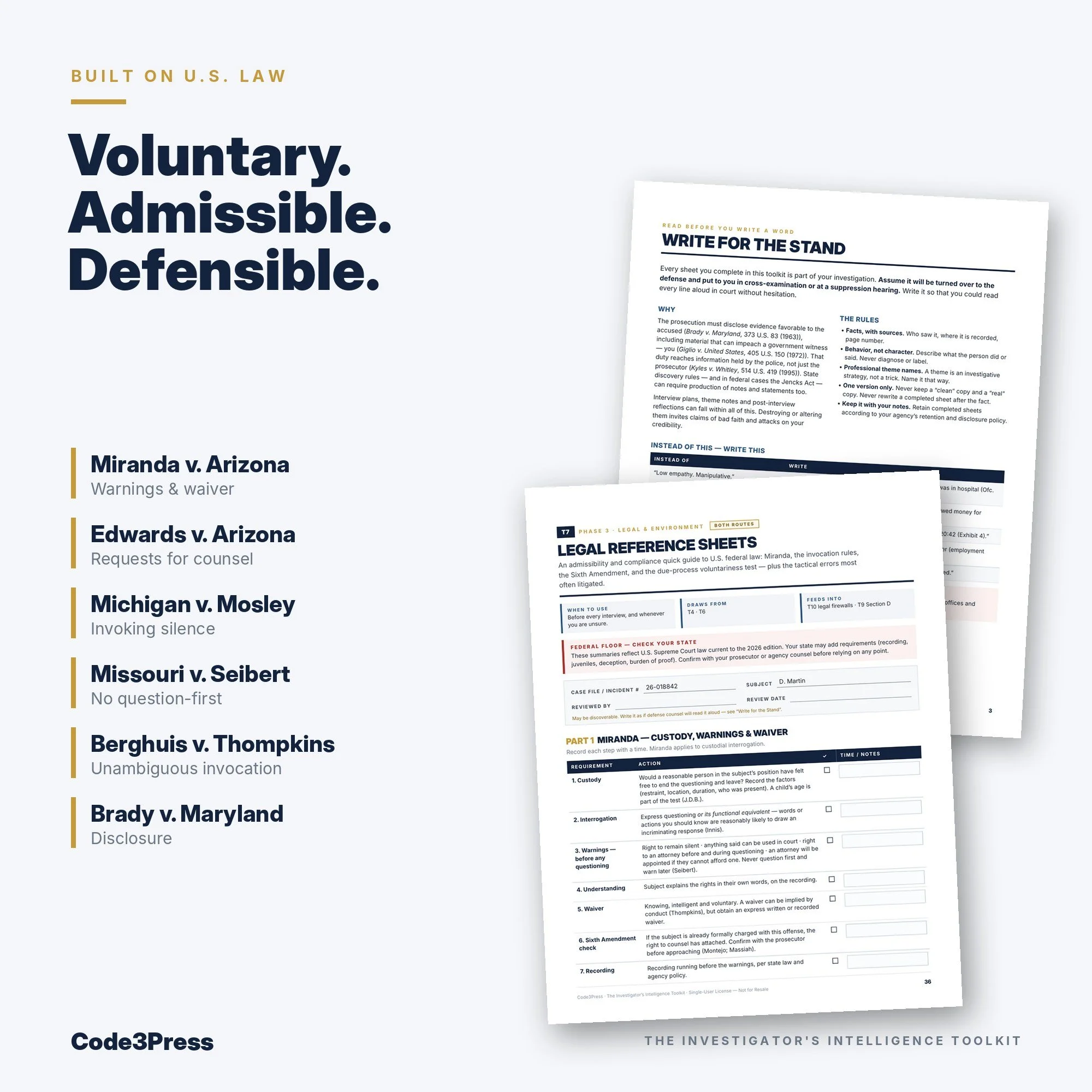 Image 6 of 7
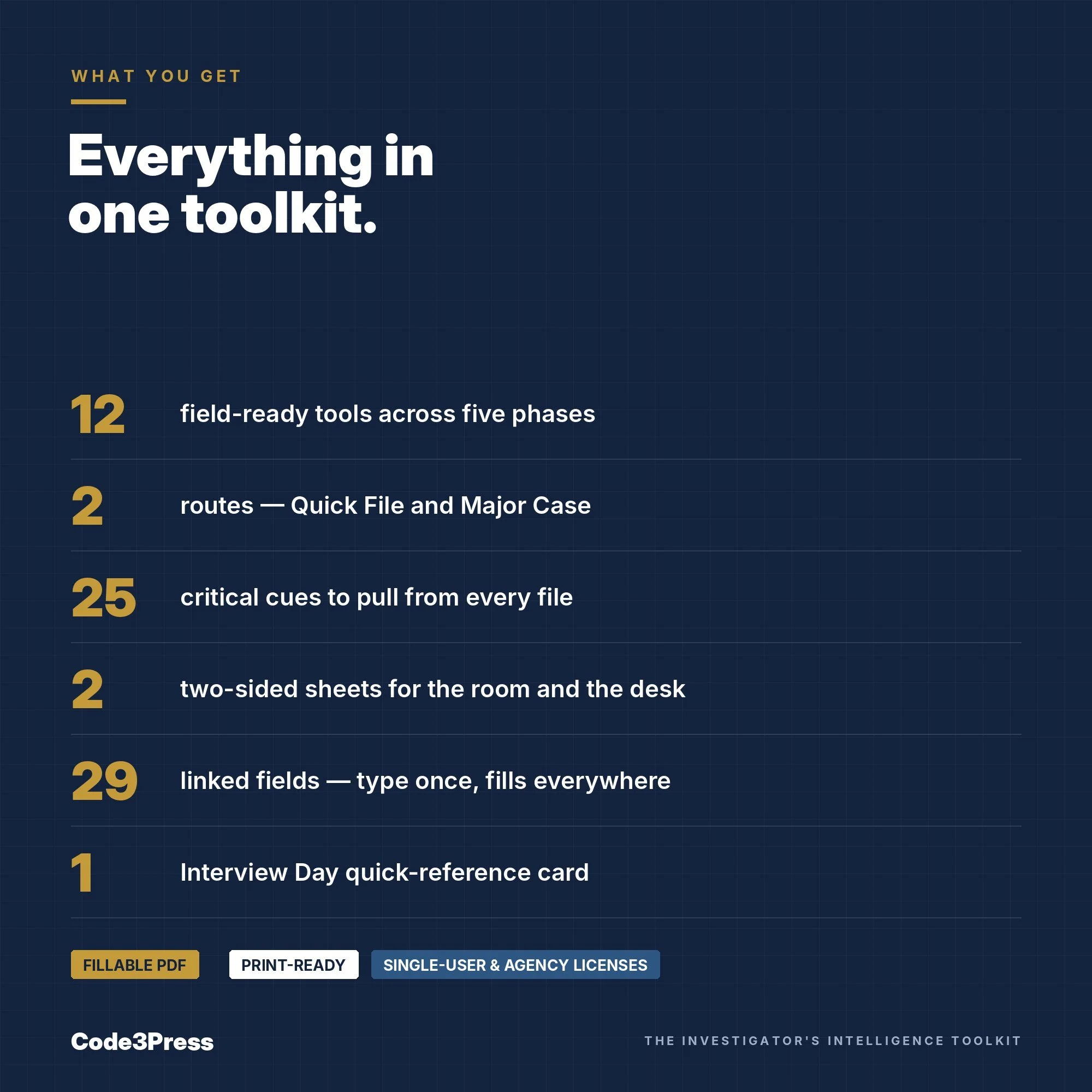 Image 7 of 7