The Interview Room Series
A complete system for investigative interviewing — four books, one career-long reference.
Written by a 23-year law enforcement veteran, this four-book progression takes an investigator from the first witness statement through the hardest, longest-running suspect interviews of a career. Each book stands alone. Read in order, they form a single operating system for investigative interviewing.

Book One
Foundations
How memory actually works, and how to get an accurate, court-ready account from a witness or victim using the cognitive interview.
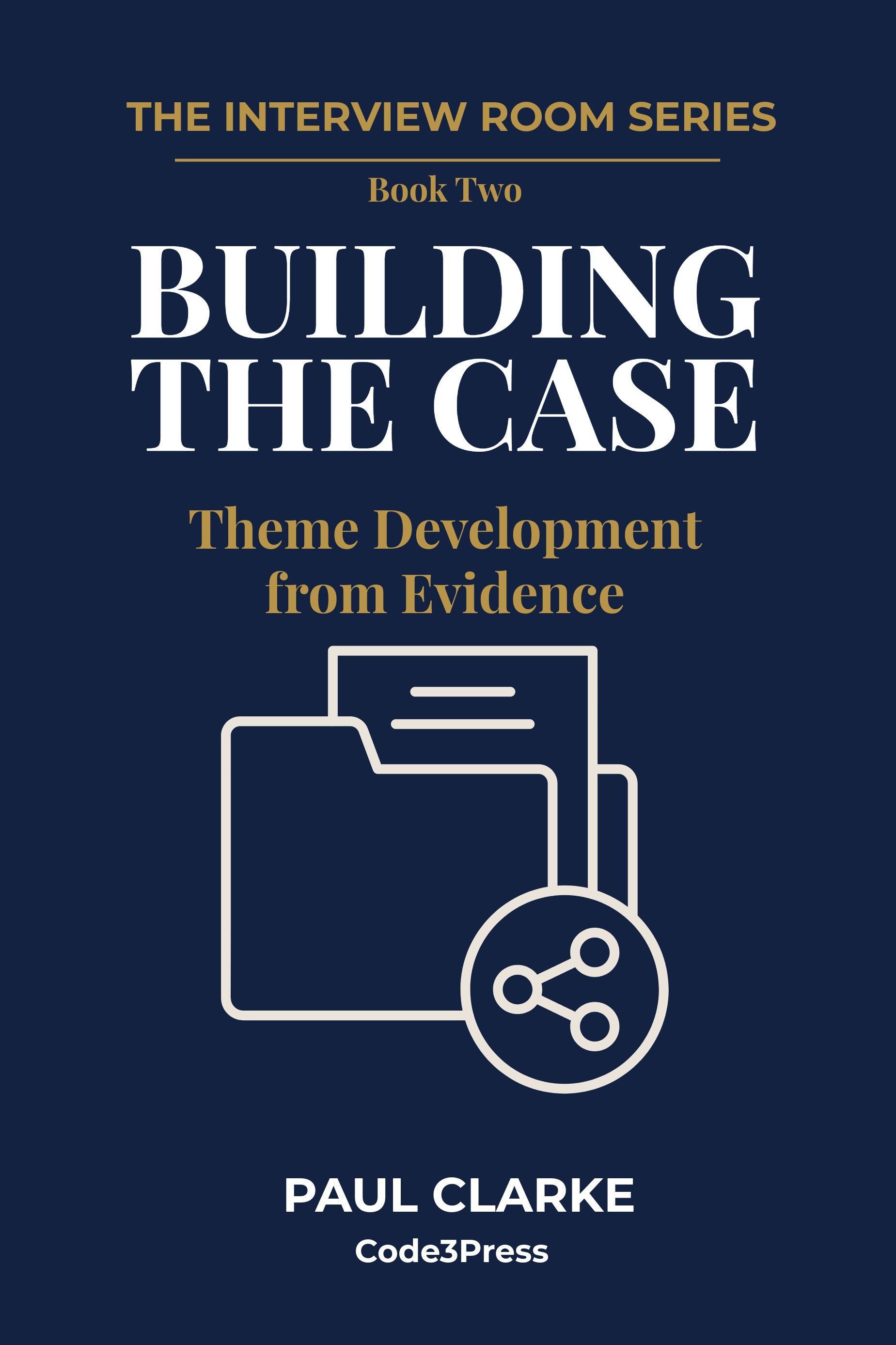
Book Two
Building the Case
How to turn a case file into a legally sound, ethically grounded interview strategy before you ever sit down across from a subject.
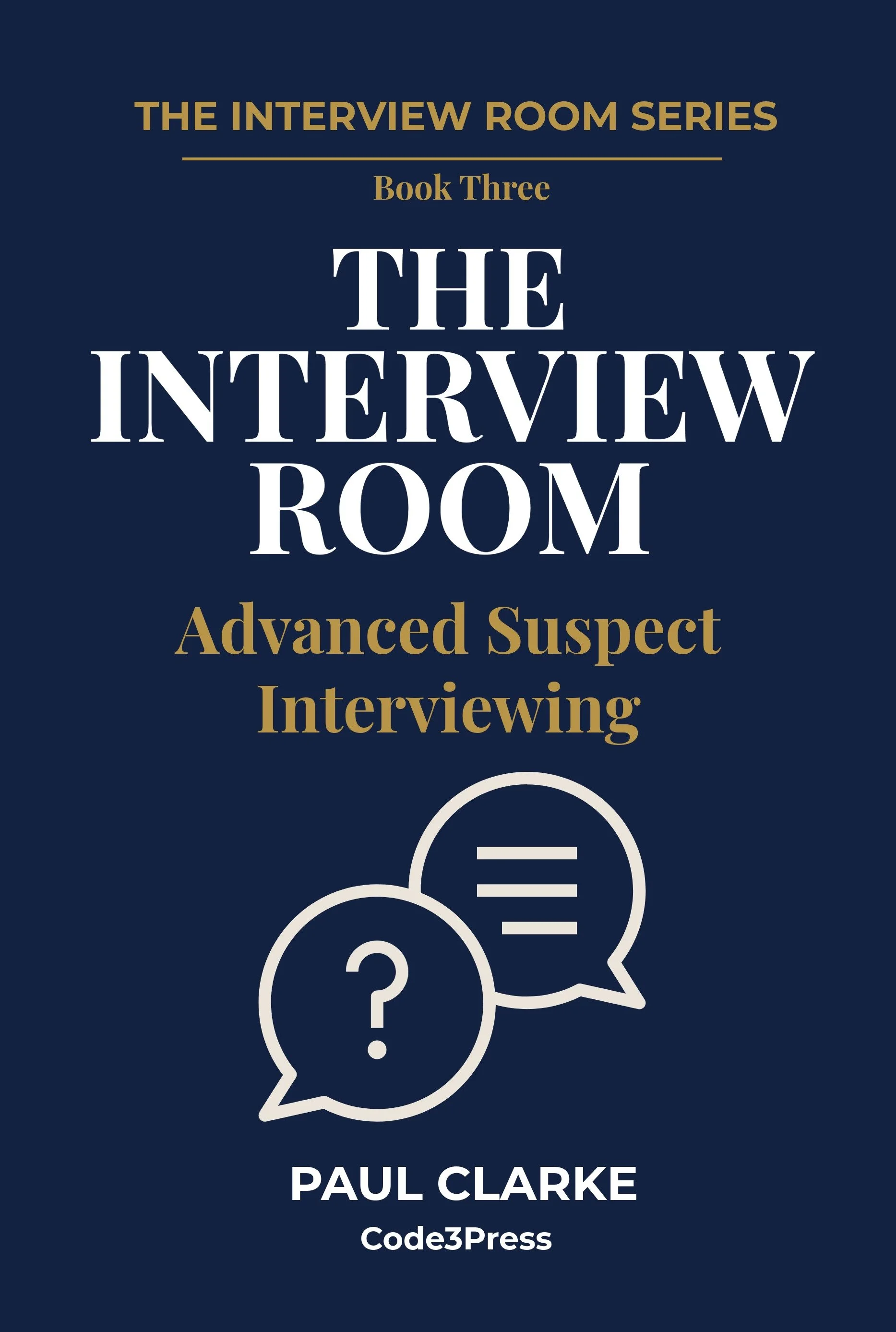
Book Three
The Interview Room
How to execute — rapport under real pressure, live theme delivery, evidence sequencing, and managing deception and resistance once the door closes.
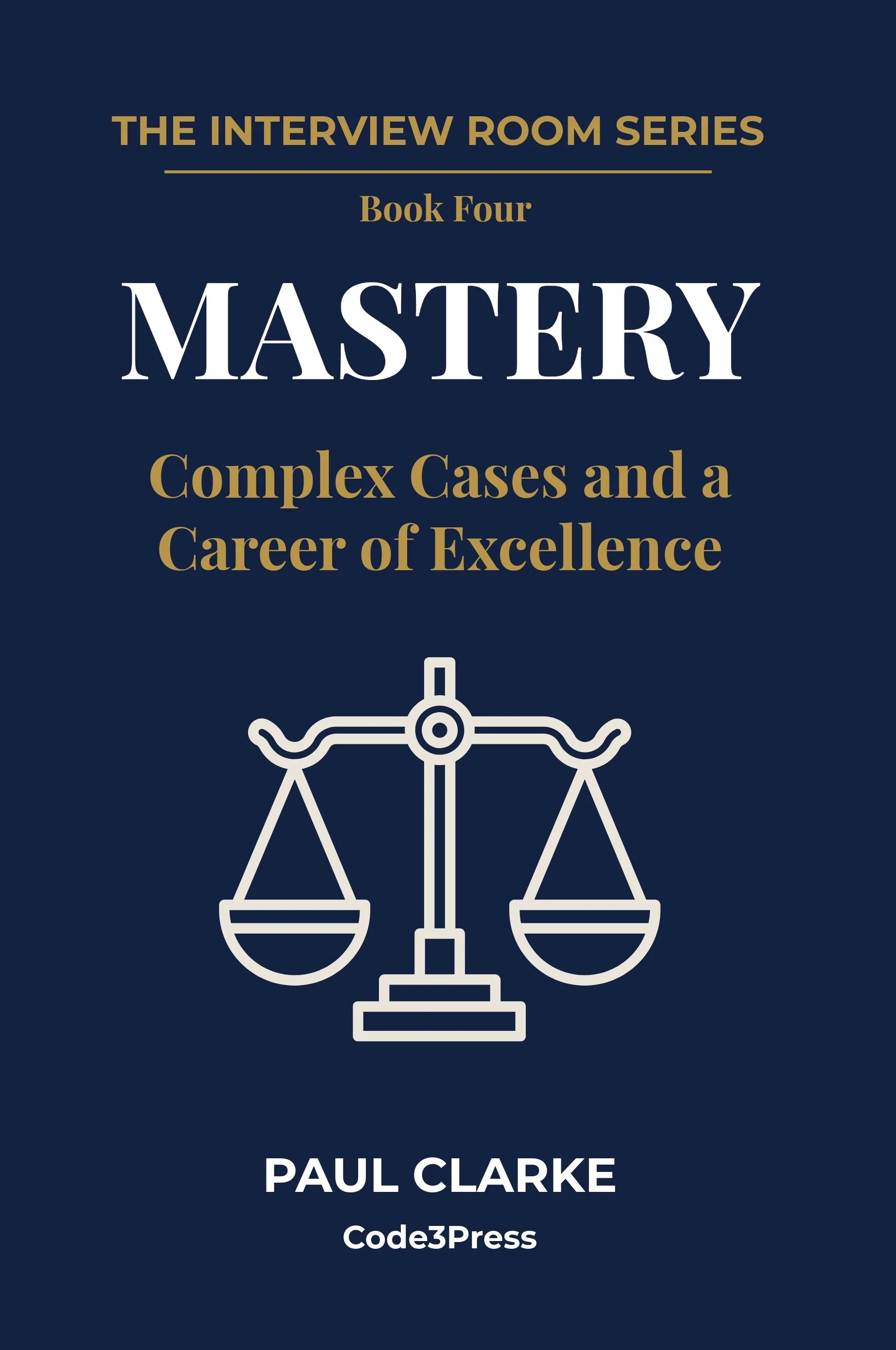
Book Four
Mastery
How to handle what the other three books can't cover in a single sitting — multi-session cases, closing an interview cleanly, and protecting your own wellbeing across a career.
Four tools.
One from every book
CODE3PRESS - FREE SERIES SAMPLER
Not a summary — a complete, working tool pulled whole from each companion Digital Toolkit in The Interview Room Series. A question bank, a backgrounding worksheet, a real-time tactic log, and a wellness tool. Print them. Use them on your next case.
THE INTERVIEW ROOM SERIES
-
The Cognitive Interview Question Bank
Nine categories of open, memory-safe questions for any witness interview, plus a one-question-per-category Quick Pull Card for the moment you need a fast reset.
-
The Backgrounding Profile Worksheet
Seven categories for building a documented, evidence-grounded profile of anyone you're about to interview — every entry tied to a named, verifiable source.
-
The Deflection Tactic Log
Six real-time counters for the deflection tactics you'll actually meet in the room, plus a live log built for use during the interview itself.
-
The Interviewer Cognitive Empathy Prep & Protection Sheet
A two-minute check before and after any emotionally demanding interview — a deliberate way to protect the person doing this work, not just the case.
A Complete System for Investigative Interviewing
Most interviewing guidance falls into two camps: academic research that never touches a real interview room, or war stories with no repeatable system underneath them. The Interview Room Series is neither. Written by a 23-year law enforcement veteran, it's a four-book progression that takes an investigator from the first witness statement all the way through the hardest, longest-running suspect interviews of a career — with a worksheet, checklist, or script for every stage along the way.
Each book stands alone. Read in order, they form a single operating system for investigative interviewing:
Book One — Foundations: How memory actually works, and how to get an accurate, court-ready account from a witness or victim using the cognitive interview.
Book Two — Building the Case: How to turn a case file into a legally sound, ethically grounded interview strategy before you ever sit down across from a subject.
Book Three — The Interview Room: How to execute — rapport under real pressure, live theme delivery, evidence sequencing, and managing deception and resistance once the door closes.
Book Four — Mastery: How to handle what the other three books can't cover in a single sitting — multi-session cases, closing an interview cleanly, protecting your own wellbeing across a career, and continuing to grow as an interviewer.
What makes this series different:
Built for the room, not the classroom. Every technique is grounded in current research and field practice, then shown in action through a running case study that carries across the series — so you see the system applied to a real (composite) file from first contact to final admission, not isolated tips in a vacuum.
Jurisdictionally honest. Interviewing law isn't the same in the U.S., Canada, and the U.K. — and most training material pretends otherwise. Every book flags exactly where technique and admissibility law intersect, with side-by-side comparisons so you know what applies where you work.
A tool for every chapter, not just a chapter of tools. Readiness checklists, interview worksheets, evidence-sequencing templates, legal firewall scripts, denial-pathway maps — the kind of material you can pull out and use on your next file, not just read once and forget.
Built for solo reading or academy adoption. Every chapter ends with discussion and practice prompts, making the series a genuine fit for in-service training and academy curricula, not just individual study.
A career-length resource. This isn't a book you read once. It's a reference you come back to before a high-stakes interview, after a hard one, and at every stage of developing as an interviewer.
Who it's for: Patrol officers moving into investigations, detectives handling major case files, field training officers, and any investigator who wants a repeatable, legally defensible system for the single highest-stakes skill in the job — getting the truth, and getting it in a form that survives a courtroom.
The Interview Room Series — Complete Digital Toolkit
43 Field-Tested Tools. Four Books. One Interview Practice You Can Defend in Court.
What This Is
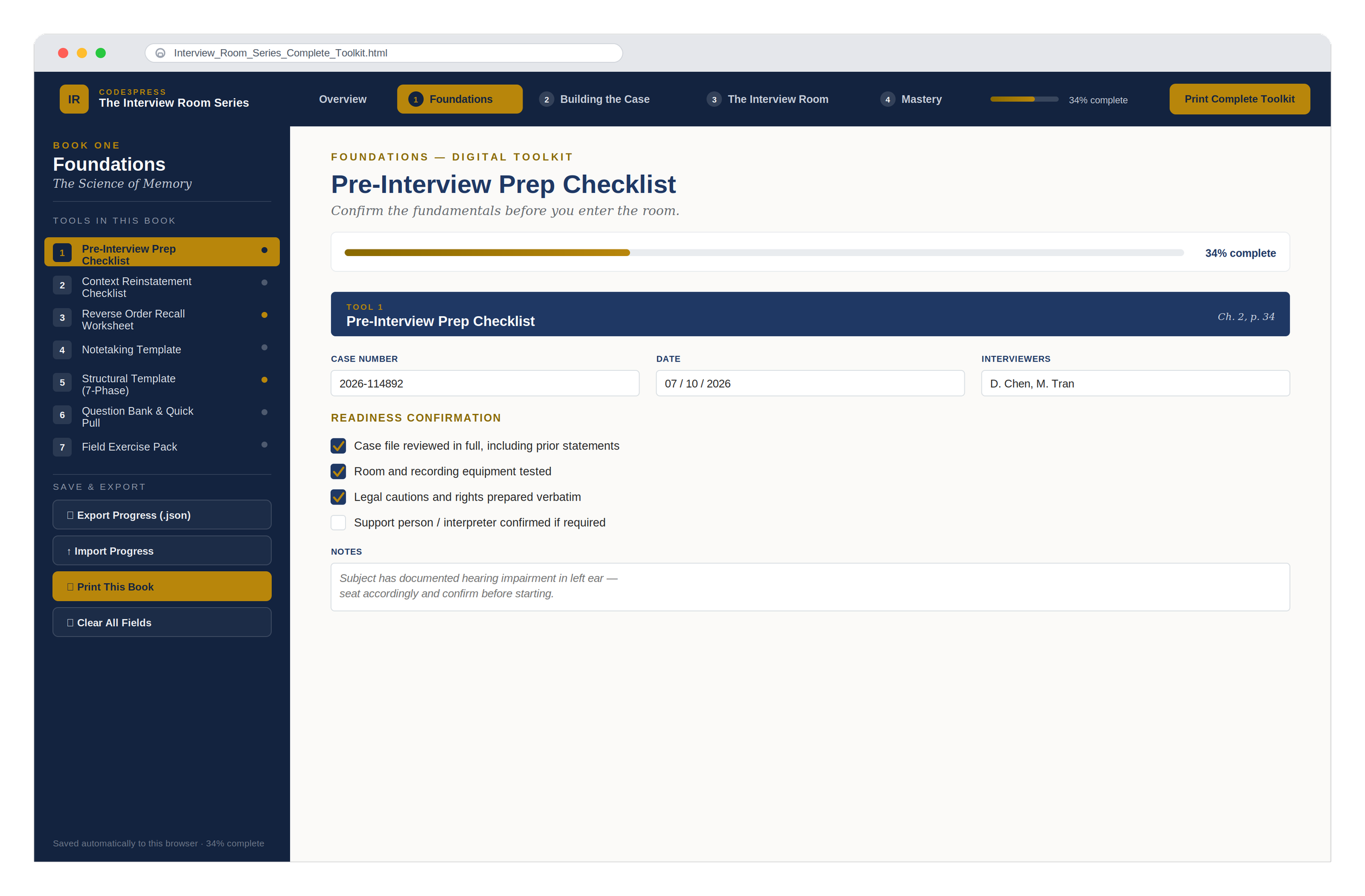
The Complete Digital Toolkit is the working companion to The Interview Room Series — every checklist, worksheet, planner, and script card from all four books, built into a single interactive file you fill in on your own computer.
This isn't a PDF you print and lose in a case file. It's not a subscription app that goes dark when the vendor shuts down or your department's IT policy changes. It's one self-contained HTML file — 43 tools, organized by book, that opens in any browser and saves your work as you type.
You already know the cost of an inconsistent interview: a missed theme, an undocumented rapport phase, a report that can't answer the defense's first question on cross. This toolkit exists so that never happens because you forgot a step — not because the step wasn't there.
How It Works (And Why That Matters)
This product is a single HTML file — the same kind of file your browser opens every time you visit a website, except this one lives entirely on your machine.
Open it like any document. Double-click the file. It opens in Chrome, Edge, Firefox, or Safari — no installation, no account, no app store.
Your data never leaves your computer. Every field you fill in is saved directly to your own browser's local storage on your own device. Nothing is uploaded, nothing sits on a server, nothing is transmitted anywhere. For officers and agencies handling sensitive investigative material, that's not a nice-to-have — it's the difference between a tool you're allowed to use and one your department's data policy forbids.
It works with no internet connection. Once you've downloaded it, the toolkit runs completely offline. Fill it in at your desk, in a vehicle, in a room with no signal — it doesn't care.
It autosaves as you type. No "Save" button to remember, no losing an hour of work because you closed the tab. Every keystroke is captured automatically, and it's still there when you reopen the file tomorrow, next week, or next case.
You can export a backup or move it to another device. Each book includes Export and Import buttons that turn your filled-in work into a portable file you control — back it up, email it to yourself, or carry it to a different computer.
You can print any tool, or the entire toolkit, in one clean pass. Every worksheet is built to print field-ready: clear labels, your answers, nothing wasted. Print a single checklist for a courtroom binder, or hit "Print Complete Toolkit" and generate the entire 43-tool series at once.
Clear, guided, impossible to get lost in. Every tool follows the same format: a labeled field, a short instruction, and a place to write. No manual required. No learning curve. You will use tool one and understand tools two through forty-three without being told how.
What is in the full Toolkit:
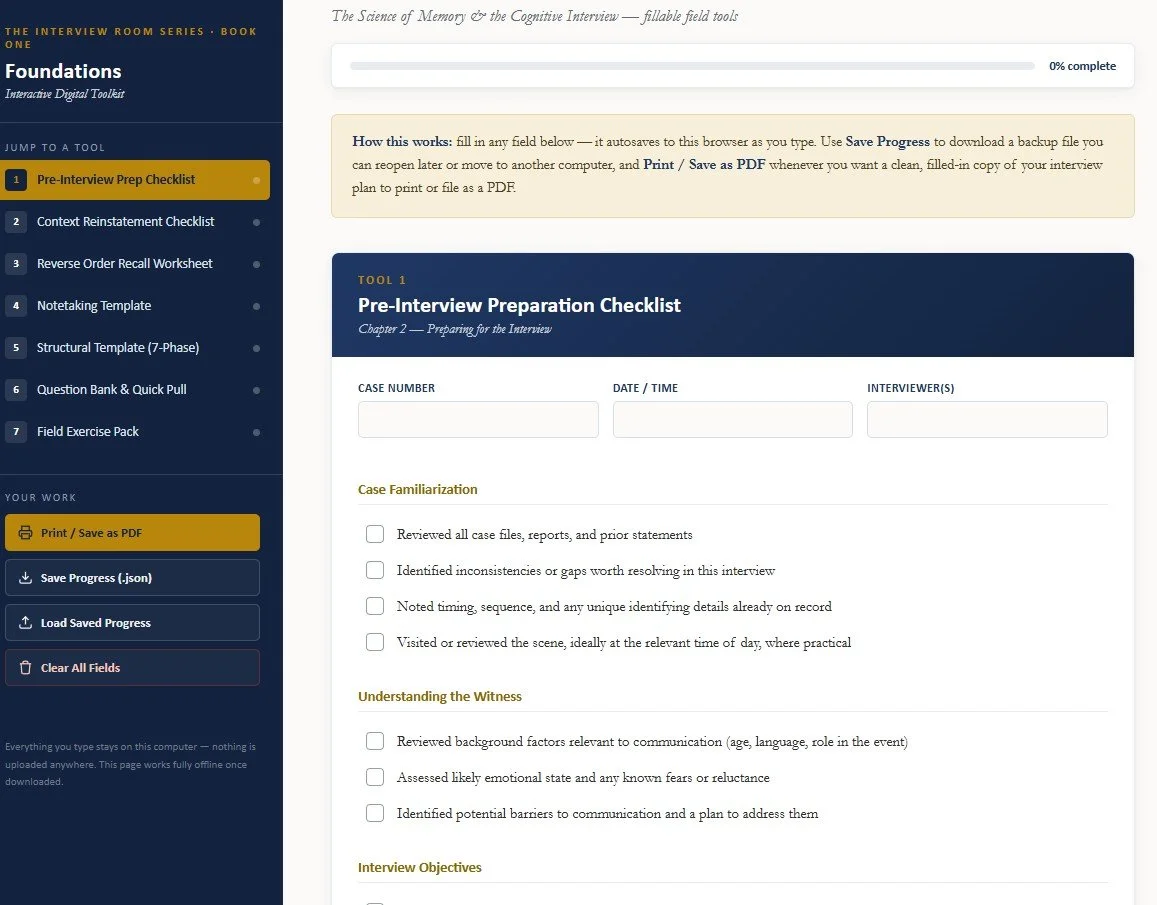
Book One — Foundations (7 Tools)
The science of memory and the cognitive interview.
Pre-Interview Prep Checklist
Context Reinstatement Checklist
Reverse Order Recall Worksheet
Notetaking Template
Structural Template (7-Phase)
Question Bank & Quick Pull
Field Exercise Pack
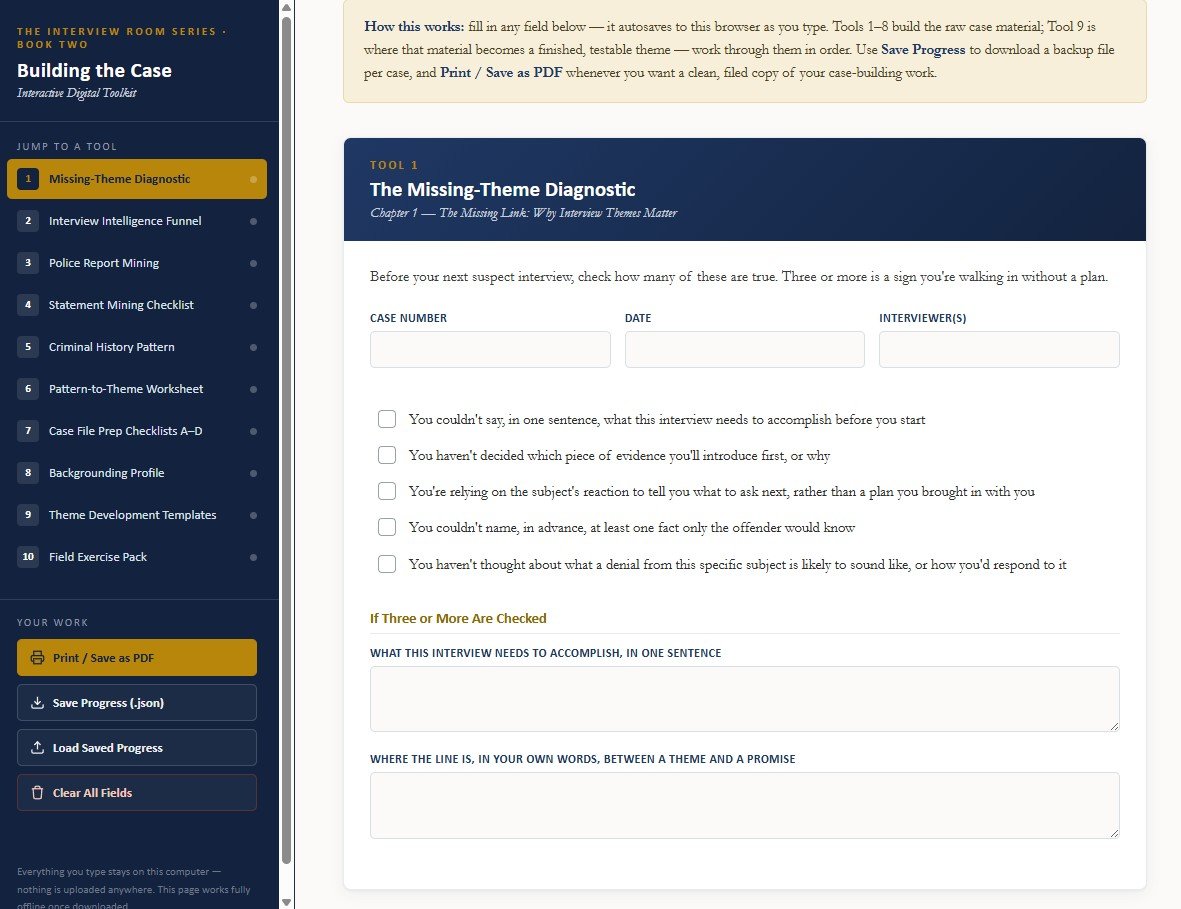
Book Two — Building the Case (10 Tools)
Turning reports, statements, and background into interview themes.
Missing-Theme Diagnostic
Interview Intelligence Funnel
Police Report Mining
Statement Mining Checklist
Criminal History Pattern
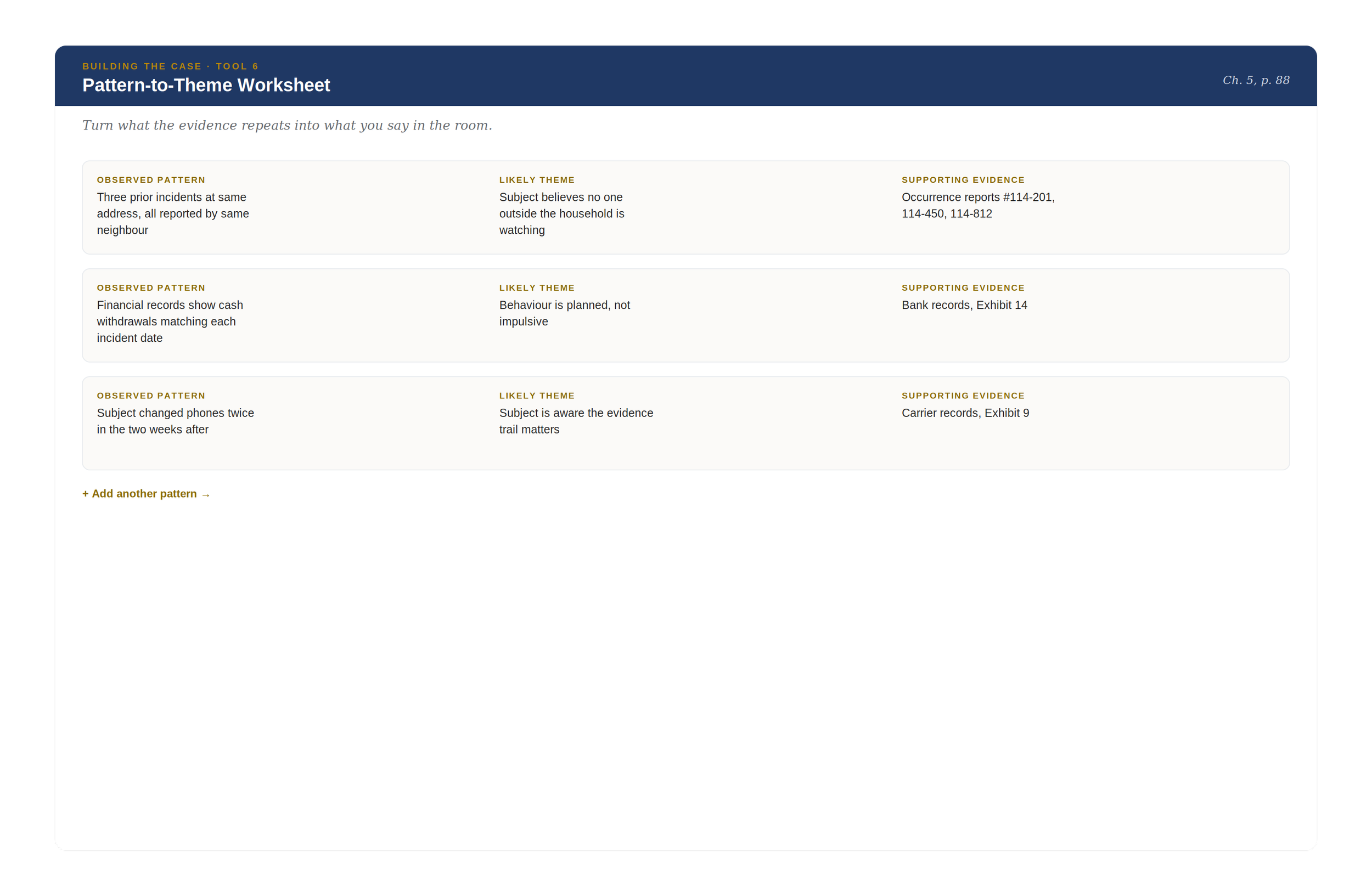
Pattern-to-Theme Worksheet
Case File Prep Checklists A–D
Backgrounding Profile
Theme Development Templates
Field Exercise Pack
Book Three — The Interview Room (16 Tools)
The complete in-room playbook, victim through suspect.
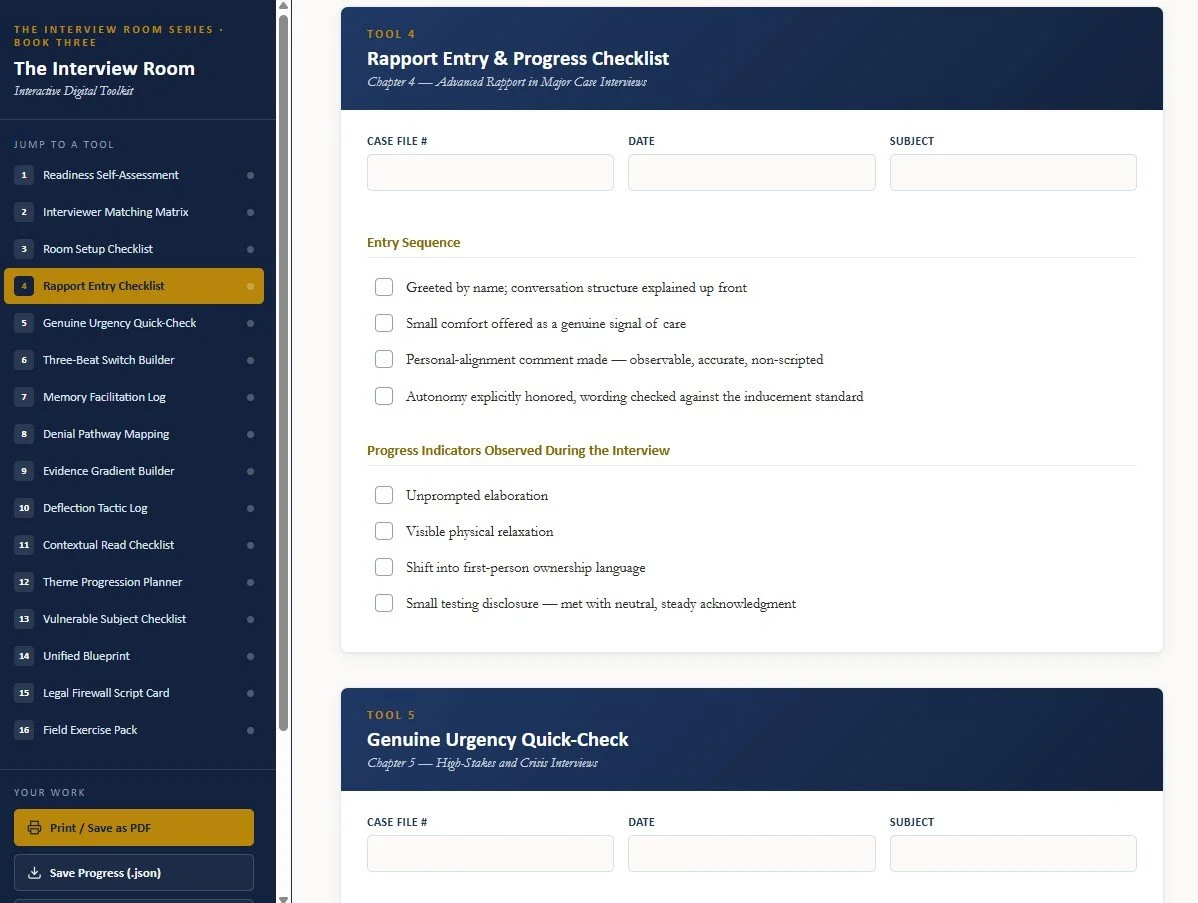
18. Readiness Self-Assessment
19. Interviewer Matching Matrix
20. Room Setup Checklist
21. Rapport Entry Checklist
22. Genuine Urgency Quick-Check
Three-Beat Switch Builder
Memory Facilitation Log
Denial Pathway Mapping
Evidence Gradient Builder
Deflection Tactic Log
Contextual Read Checklist
Theme Progression Planner
Vulnerable Subject Checklist
Unified Blueprint
Legal Firewall Script Card
Field Exercise Pack
Book Four — Mastery (10 Tools)
Complex cases and a career of continued excellence.
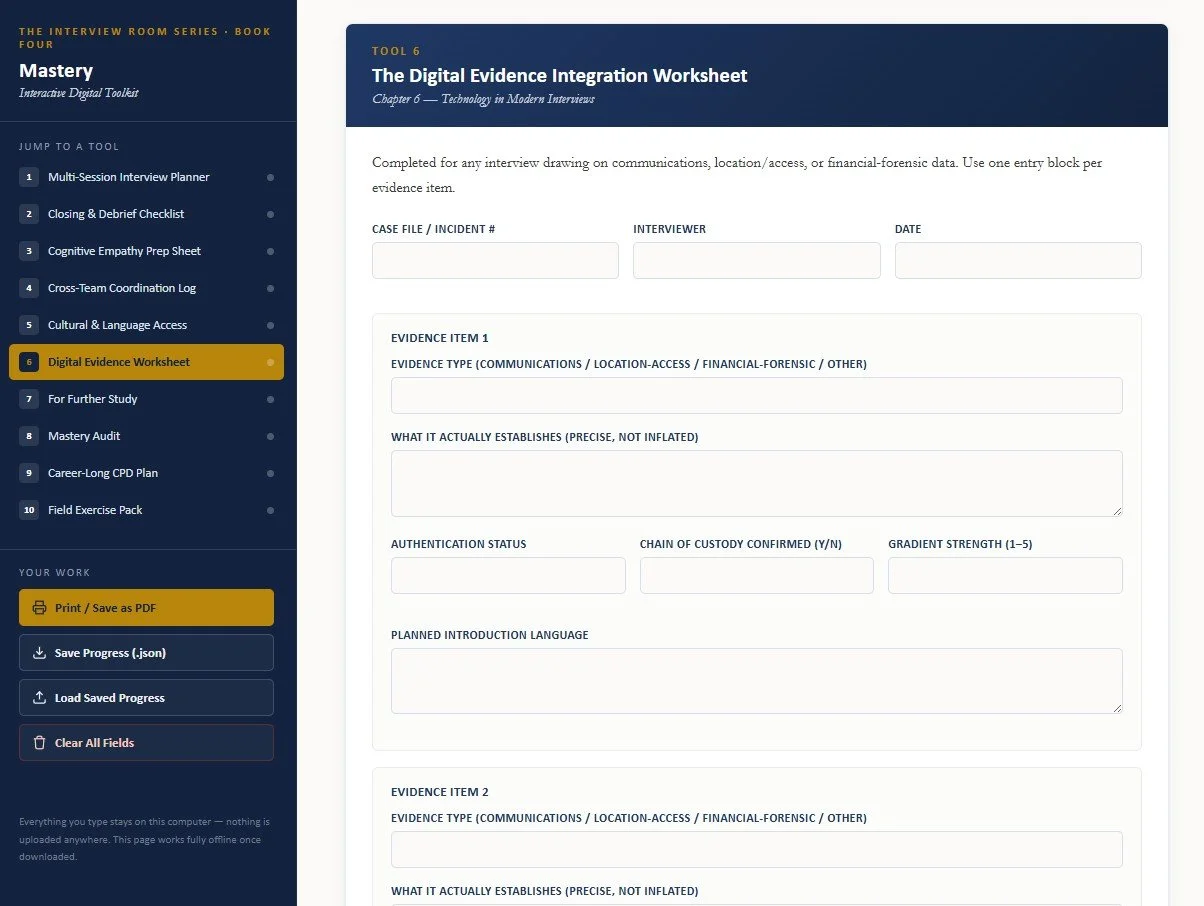
Multi-Session Interview Planner
Closing & Debrief Checklist
Cognitive Empathy Prep Sheet
Cross-Team Coordination Log
Cultural & Language Access
Digital Evidence Worksheet
For Further Study
Mastery Audit
Career-Long CPD Plan
Field Exercise Pack
Why It's Worth $99
Consistency, every time, on every case. The single biggest risk in an investigative interview isn't a bad question — it's a missing step. A rapport phase skipped under time pressure. A caution not properly documented. A recall technique forgotten because the last time you used it was in a training class two years ago. This toolkit turns your process into a repeatable structure you run every single time, whether it's your first interview of the year or your five-hundredth. Consistency is what makes a body of work look professional instead of improvised — to a supervisor, to Crown counsel, to a jury.
Built for defensibility, not just documentation. Every worksheet is structured so the reasoning behind your approach is captured alongside the content of what was said — why a theme was chosen, how urgency was established, what pathway a denial took. When a defense lawyer challenges your methodology, "I always follow the same structured process, and here it is in writing" is a very different position than trying to reconstruct your thinking from memory eighteen months later.
Victim and suspect interviews, covered separately and properly. This isn't a single generic script stretched to fit every situation. Foundations and The Interview Room build the memory-focused, rapport-first approach for victims and witnesses; Building the Case and the suspect-facing tools in Book Three build the evidence-based, theme-driven approach for subjects. You get the right tool for the interview you're actually conducting.
No data storage headache. Departments are — rightly — cautious about where investigative material lives. This product was built around that reality: everything stays local to your machine, nothing touches a third-party server, and you decide what gets exported and where it goes. You get all the convenience of digital tools with none of the exposure of cloud software.
One purchase, an entire career. This isn't a single-case tool. It's a Pre-Interview Prep Checklist you'll use on Monday, a Legal Firewall Script Card you'll keep in reach for years, and a Career-Long CPD Plan built to outlast any one assignment. Compare $99 to the cost of a single afternoon of specialized training, a consultant's hourly rate, or the discovery-motion hours spent defending an interview that had no consistent structure behind it — and the toolkit isn't an expense. It's the cheapest insurance policy in your entire case file.
Genuinely easy to use — day one, no training required. No login, no manual, no learning curve steep enough to make you avoid opening it. Every one of the 43 tools follows the same clear pattern: what to do, and a clean place to do it. If you can fill out a form, you can run this toolkit at full capability the first time you open it.
The Interview Room Series — Complete Digital Toolkit is published by Code3Press.