
 Image 1 of 1
Master the critical moments after the call with the essential leadership manual for first responder supervisors.
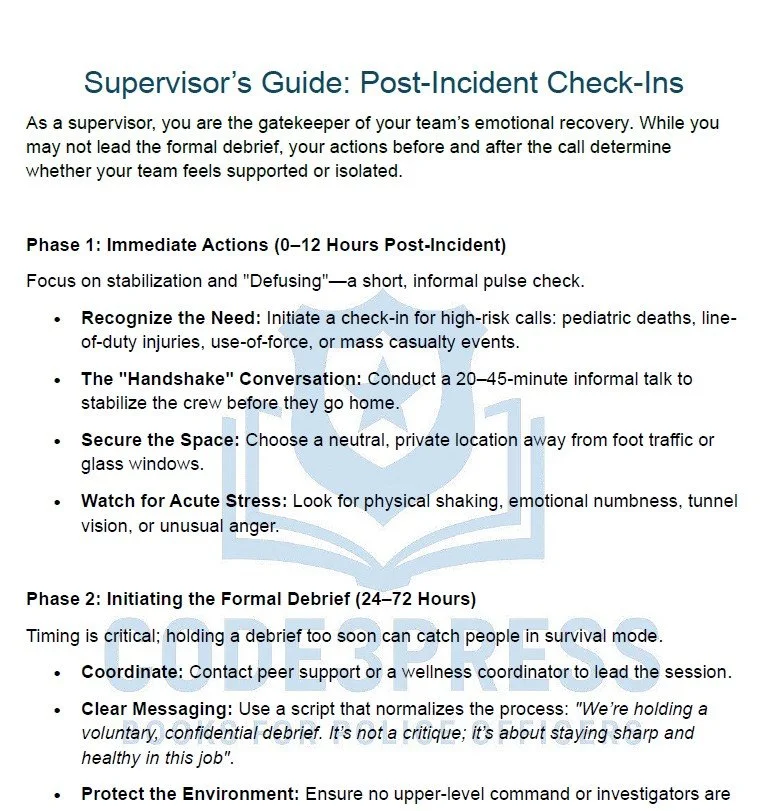
As a supervisor, you are the gatekeeper of your team’s emotional recovery. While you may not always lead the formal debriefing session, your actions determine whether your personnel feel supported or isolated in the aftermath of a crisis. The Code3Press Supervisor’s Guide provides a tactical, phase-based roadmap to help you navigate these high-stakes leadership responsibilities with confidence and empathy.
Phase-Based Action Plan: Clear instructions for the critical windows of recovery, from the first 12 hours to long-term follow-up.
The "Handshake" Conversation: Learn how to conduct effective 20–45 minute informal "defusing" talks to stabilize your crew before they go home.
Formal Debrief Coordination: Guidelines on when to initiate a formal session (24–72 hours) and how to protect the psychological safety of the environment.
Leadership Scripts: Proven language for 1-on-1 check-ins, establishing boundaries, and normalizing the debriefing process.
Supervisor’s Do’s and Don’ts: A quick-reference table to ensure you are respecting confidentiality and modeling healthy vulnerability without overstepping into managerial or investigative roles.
First Responder Wellness Resource Sheet: A ready-to-distribute handout for your team covering common trauma reactions, self-care "reset" tactics, and national crisis resources.
Recognition of High-Risk Triggers: Specific guidance on identifying calls that require immediate intervention, such as pediatric deaths, line-of-duty injuries, and mass casualty events.
Symptom Identification: Tools to help you spot acute stress, "drip effect" cumulative trauma, and red flags like suicidal ideation or reckless behavior.
Operational Integration: Strategies to stick to basic routines—exercise, hydration, and nutrition—to help your team regulate their systems after high-intensity shifts.
Leadership doesn't end when the scene is cleared. Give your supervisors the tools to protect their most valuable asset: their people.
Master the critical moments after the call with the essential leadership manual for first responder supervisors.
As a supervisor, you are the gatekeeper of your team’s emotional recovery. While you may not always lead the formal debriefing session, your actions determine whether your personnel feel supported or isolated in the aftermath of a crisis. The Code3Press Supervisor’s Guide provides a tactical, phase-based roadmap to help you navigate these high-stakes leadership responsibilities with confidence and empathy.
Phase-Based Action Plan: Clear instructions for the critical windows of recovery, from the first 12 hours to long-term follow-up.
The "Handshake" Conversation: Learn how to conduct effective 20–45 minute informal "defusing" talks to stabilize your crew before they go home.
Formal Debrief Coordination: Guidelines on when to initiate a formal session (24–72 hours) and how to protect the psychological safety of the environment.
Leadership Scripts: Proven language for 1-on-1 check-ins, establishing boundaries, and normalizing the debriefing process.
Supervisor’s Do’s and Don’ts: A quick-reference table to ensure you are respecting confidentiality and modeling healthy vulnerability without overstepping into managerial or investigative roles.
First Responder Wellness Resource Sheet: A ready-to-distribute handout for your team covering common trauma reactions, self-care "reset" tactics, and national crisis resources.
Recognition of High-Risk Triggers: Specific guidance on identifying calls that require immediate intervention, such as pediatric deaths, line-of-duty injuries, and mass casualty events.
Symptom Identification: Tools to help you spot acute stress, "drip effect" cumulative trauma, and red flags like suicidal ideation or reckless behavior.
Operational Integration: Strategies to stick to basic routines—exercise, hydration, and nutrition—to help your team regulate their systems after high-intensity shifts.
Leadership doesn't end when the scene is cleared. Give your supervisors the tools to protect their most valuable asset: their people.