
 Image 1 of 3
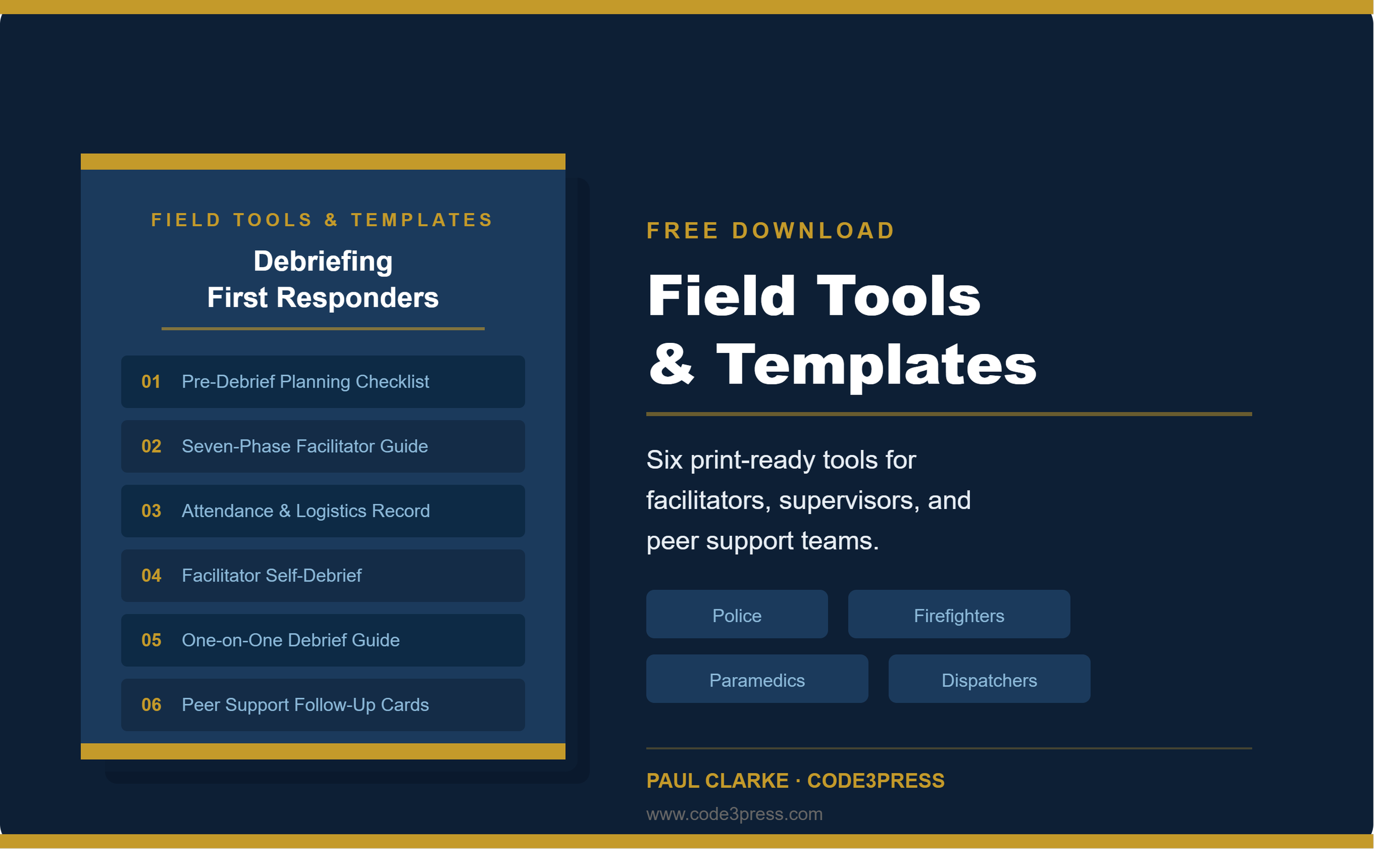 Image 2 of 3
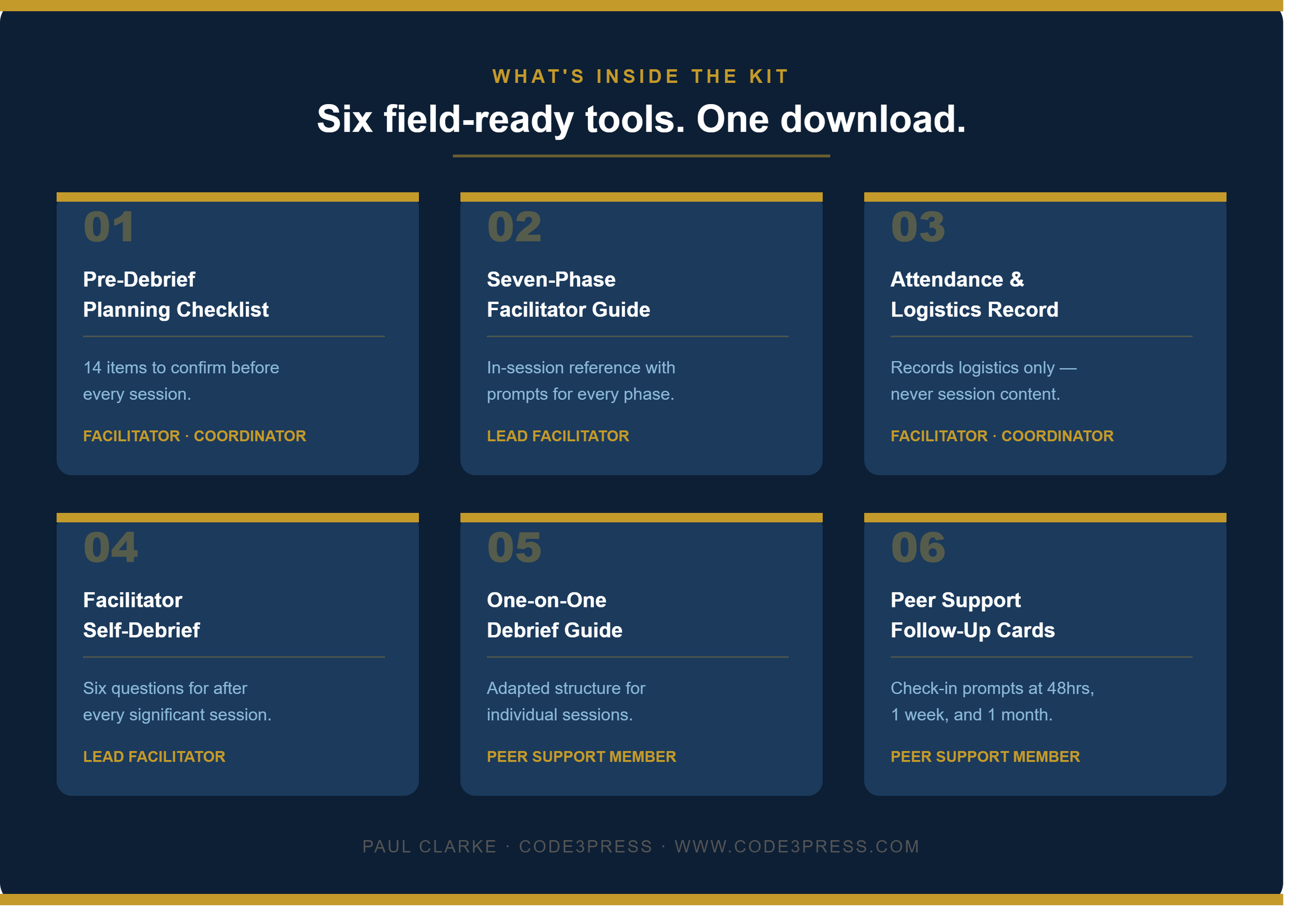 Image 3 of 3
The debrief ends. The work doesn't stop there.
What happens in the days before and after a critical incident debrief determines whether the session actually helps. A facilitator who walks in underprepared loses the room. A peer support member who follows up too late — or not at all — leaves people carrying it alone again. A supervisor who has no structure for the thirty minutes after a hard call misses the window that matters most.
These six tools close those gaps. Each one is built for a specific role, a specific moment, and a specific need. Print them. Laminate them. Keep them in your kit. They are designed to be used, not filed.
What's included
Template 1 — Pre-Debrief Planning Checklist
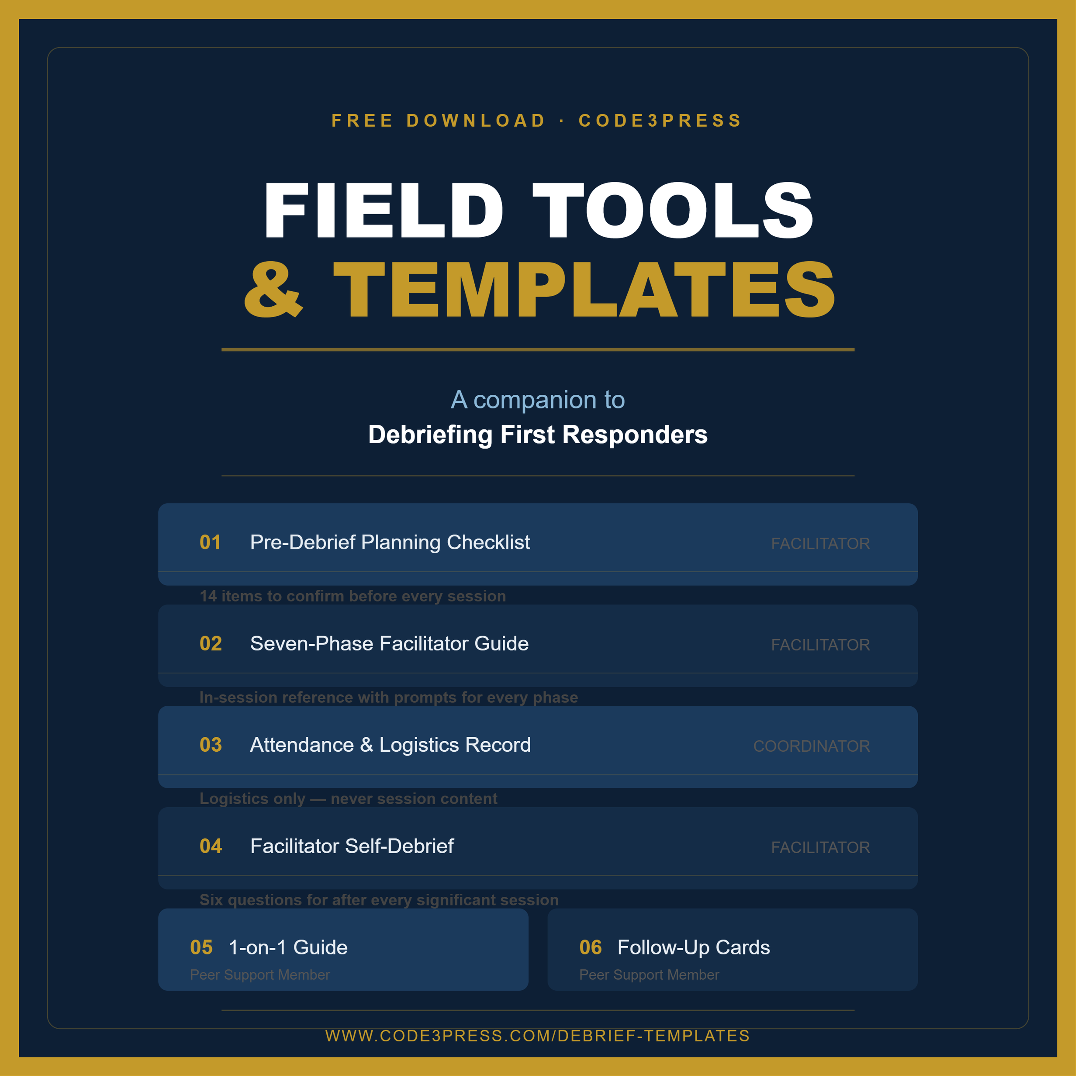
14 items to confirm before every session. Timing, location, participant list, confidentiality protocol, co-facilitator, EAP contacts, post-session facilitator debrief — all in a single tick-box form. The debrief that goes sideways is almost always the one where someone skipped this step.
Template 2 — Seven-Phase Facilitator Guide
A condensed in-session reference covering all seven CISD phases with purpose, timing, and key prompts for each. The Reaction phase is highlighted because it is where the debrief does its most important work — and where facilitators most commonly make the mistake of talking when they should be listening. Print single-sided. Keep it in front of you.
Template 3 — Attendance and Logistics Record
The only document that should ever be filed after a debrief. Records date, location, duration, facilitator, and number of participants — nothing else. The "do not record names" row is highlighted in amber. The legal framework behind this is covered in full in Chapter 13 of the book.
Template 4 — Facilitator Self-Debrief
Six questions for after every significant session. What landed on me today? How did I show up? Did this touch anything personal? What do I need right now? Complete it with a co-facilitator or clinical supervisor within fifteen minutes of the session ending. Secondary traumatic stress in facilitators is real, it accumulates quietly, and this is the most direct tool for interrupting that pattern.
Template 5 — One-on-One Debrief Guide
For when someone can't or won't attend a group session. An adapted six-phase structure with sample language for each phase, the key differences from group facilitation called out clearly, and a reminder that the session must always close with a confirmed follow-up plan — never an open-ended offer to reach out.
Template 6 — Peer Support Follow-Up Cards
Check-in prompts at five time points: 24–48 hours, three to five days, one week, two to four weeks, and ongoing if concern remains. The card also names who needs follow-up most — the quiet ones who attended the group session but said nothing, the "fine" ones who answered too quickly, and the cumulative ones carrying more than one call.
Also included
Debrief Go-Kit Checklist — everything a facilitator needs in their kit, from printed templates to crisis line numbers. Includes a fillable crisis resources table with Talk Suicide Canada, 988, and Safe Call Now numbers ready to complete with local contacts.
The debrief ends. The work doesn't stop there.
What happens in the days before and after a critical incident debrief determines whether the session actually helps. A facilitator who walks in underprepared loses the room. A peer support member who follows up too late — or not at all — leaves people carrying it alone again. A supervisor who has no structure for the thirty minutes after a hard call misses the window that matters most.
These six tools close those gaps. Each one is built for a specific role, a specific moment, and a specific need. Print them. Laminate them. Keep them in your kit. They are designed to be used, not filed.
What's included
Template 1 — Pre-Debrief Planning Checklist
14 items to confirm before every session. Timing, location, participant list, confidentiality protocol, co-facilitator, EAP contacts, post-session facilitator debrief — all in a single tick-box form. The debrief that goes sideways is almost always the one where someone skipped this step.
Template 2 — Seven-Phase Facilitator Guide
A condensed in-session reference covering all seven CISD phases with purpose, timing, and key prompts for each. The Reaction phase is highlighted because it is where the debrief does its most important work — and where facilitators most commonly make the mistake of talking when they should be listening. Print single-sided. Keep it in front of you.
Template 3 — Attendance and Logistics Record
The only document that should ever be filed after a debrief. Records date, location, duration, facilitator, and number of participants — nothing else. The "do not record names" row is highlighted in amber. The legal framework behind this is covered in full in Chapter 13 of the book.
Template 4 — Facilitator Self-Debrief
Six questions for after every significant session. What landed on me today? How did I show up? Did this touch anything personal? What do I need right now? Complete it with a co-facilitator or clinical supervisor within fifteen minutes of the session ending. Secondary traumatic stress in facilitators is real, it accumulates quietly, and this is the most direct tool for interrupting that pattern.
Template 5 — One-on-One Debrief Guide
For when someone can't or won't attend a group session. An adapted six-phase structure with sample language for each phase, the key differences from group facilitation called out clearly, and a reminder that the session must always close with a confirmed follow-up plan — never an open-ended offer to reach out.
Template 6 — Peer Support Follow-Up Cards
Check-in prompts at five time points: 24–48 hours, three to five days, one week, two to four weeks, and ongoing if concern remains. The card also names who needs follow-up most — the quiet ones who attended the group session but said nothing, the "fine" ones who answered too quickly, and the cumulative ones carrying more than one call.
Also included
Debrief Go-Kit Checklist — everything a facilitator needs in their kit, from printed templates to crisis line numbers. Includes a fillable crisis resources table with Talk Suicide Canada, 988, and Safe Call Now numbers ready to complete with local contacts.