
 Image 1 of 1
Equip your agency with the definitive field manual for post-incident psychological recovery.
In the high-stakes world of first response, what happens after the sirens fade is just as critical as the call itself. The Code3Press Debriefing Framework is a professional, field-ready guide designed to help peer support leaders, supervisors, and mental health professionals facilitate structured, safe, and effective critical incident debriefs.
This comprehensive framework moves beyond simple "venting" sessions, providing a clinically-informed, 7-phase structure that normalizes stress reactions and builds long-term team resilience.
The 7-Phase Facilitator Guide: A step-by-step roadmap from Introduction to Re-entry, complete with exact sample prompts and scripts for every stage.
Facilitator Opening Statement: A pre-written script to immediately establish confidentiality, voluntary participation, and a "no-ranks" environment.
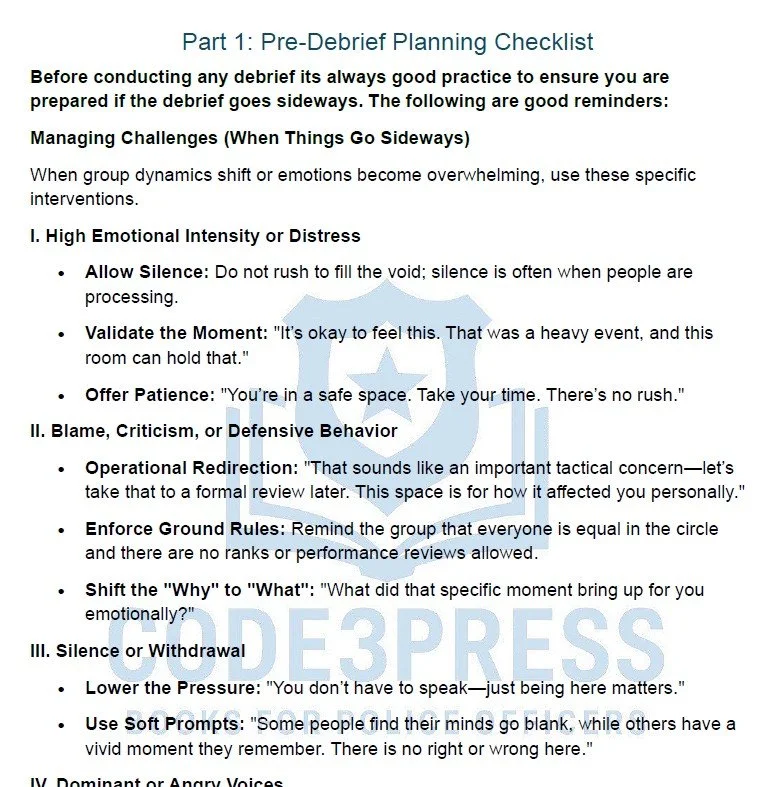
Pre-Debrief Planning Checklist: Ensure your logistics—timing, location, and triggers—are optimized for a successful session.
Managing Difficult Dynamics Cheat Sheet: Tactical scripts for handling "Angry" voices, dominant participants, finger-pointing, and "Fixers".
The "What vs. Why" Pro-Tip: Learn to ask questions that encourage reflection rather than making responders feel like they are under interrogation.
Post-Debrief Reflection Tool: A self-assessment guide to help facilitators plan follow-up care and manage their own secondary trauma.
Evidence-Based Structure: Grounded in proven psychological safety principles including respect for individual reactions and emotional safety.
Field-Tested Prompts: Dozens of targeted questions to help responders process everything from the "drip effect" of stress to the "human cost" of the job.
Operational Integration: Guidance on separating emotional debriefs from tactical reviews to protect your members and your agency.
Equip your agency with the definitive field manual for post-incident psychological recovery.
In the high-stakes world of first response, what happens after the sirens fade is just as critical as the call itself. The Code3Press Debriefing Framework is a professional, field-ready guide designed to help peer support leaders, supervisors, and mental health professionals facilitate structured, safe, and effective critical incident debriefs.
This comprehensive framework moves beyond simple "venting" sessions, providing a clinically-informed, 7-phase structure that normalizes stress reactions and builds long-term team resilience.
The 7-Phase Facilitator Guide: A step-by-step roadmap from Introduction to Re-entry, complete with exact sample prompts and scripts for every stage.
Facilitator Opening Statement: A pre-written script to immediately establish confidentiality, voluntary participation, and a "no-ranks" environment.
Pre-Debrief Planning Checklist: Ensure your logistics—timing, location, and triggers—are optimized for a successful session.
Managing Difficult Dynamics Cheat Sheet: Tactical scripts for handling "Angry" voices, dominant participants, finger-pointing, and "Fixers".
The "What vs. Why" Pro-Tip: Learn to ask questions that encourage reflection rather than making responders feel like they are under interrogation.
Post-Debrief Reflection Tool: A self-assessment guide to help facilitators plan follow-up care and manage their own secondary trauma.
Evidence-Based Structure: Grounded in proven psychological safety principles including respect for individual reactions and emotional safety.
Field-Tested Prompts: Dozens of targeted questions to help responders process everything from the "drip effect" of stress to the "human cost" of the job.
Operational Integration: Guidance on separating emotional debriefs from tactical reviews to protect your members and your agency.