 Image 1 of 1
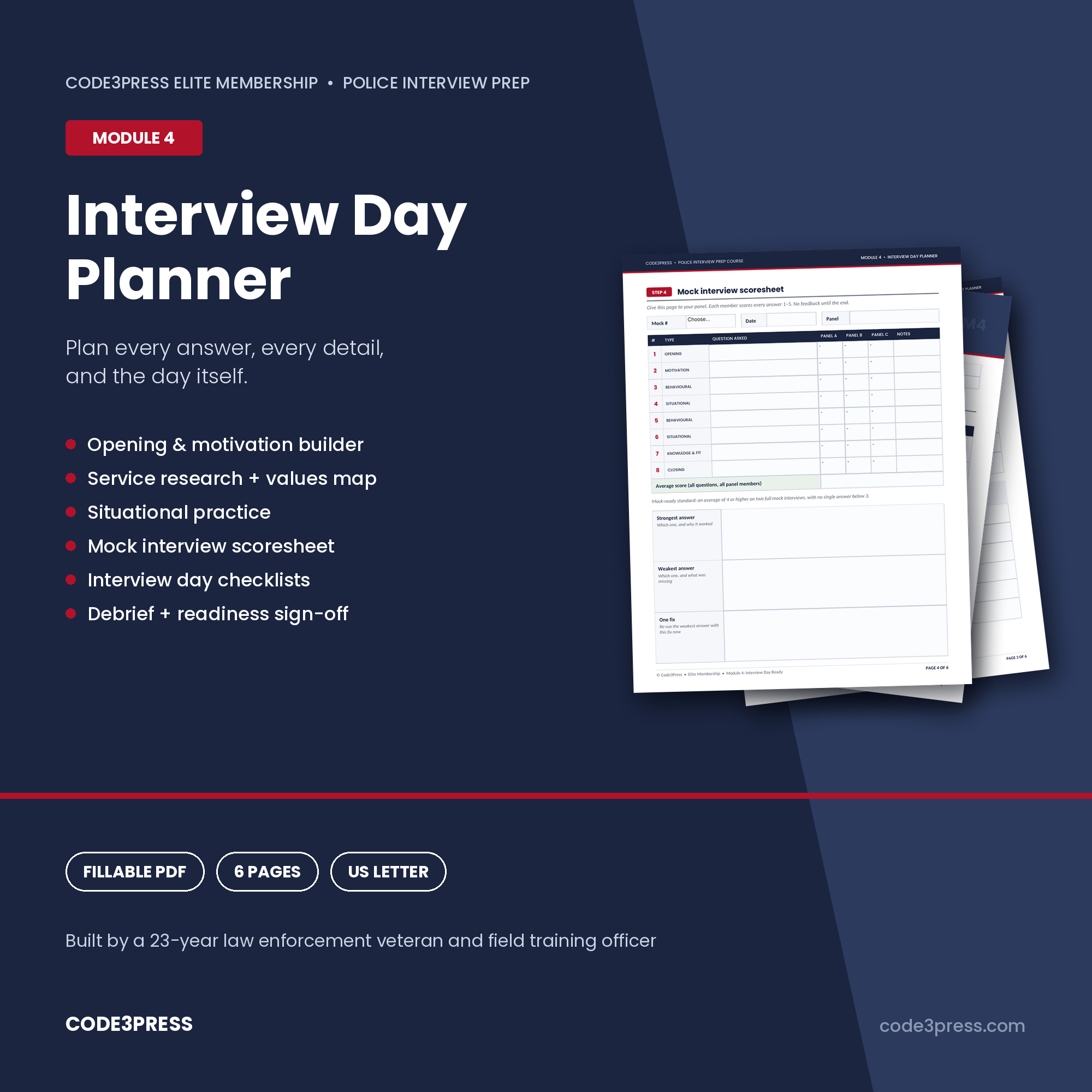
Your last step before the panel. Plan every answer, every detail, and the day itself.
By interview day, most candidates have their STAR stories ready. What catches them out is everything else: the opening question, “Why policing?”, “Why our service?”, a “what would you do” scenario, and a closing they never prepared. This fillable planner takes you through each of these, helps you run and score full mock interviews, and gets your interview day organized, so all your energy goes into your answers.
Inside the planner:
Your opening and motivation: build “Tell us about yourself” using Present, Past, Future, and a “Why do you want to be a police officer?” answer with a genuine reason, real evidence, and what you’ll contribute
Research the service: record the service’s mission, match each core value to a story from your bank, and draft a “Why our service?” answer that couldn’t apply to any other service
Situational practice: work through two realistic “what would you do?” scenarios using the five-step approach, ending each with a bridge to your own experience
Mock interview scoresheet: hand it to your mock panel. Up to three panel members score eight questions covering every question type, then you record your strongest answer, your weakest, and one fix
Close strong: prepare three questions for the panel and a 30-second closing statement
Interview day plan: location, time, parking, what to bring, plus night-before and morning-of checklists
After-interview debrief: capture the questions you were asked, what went well, and what you’d change, within 24 hours and whatever the outcome
Final readiness sign-off: a course-wide checklist that tells you when you’re truly ready
Panels aren’t looking for flawless candidates. They’re looking for prepared ones.