 Image 1 of 1
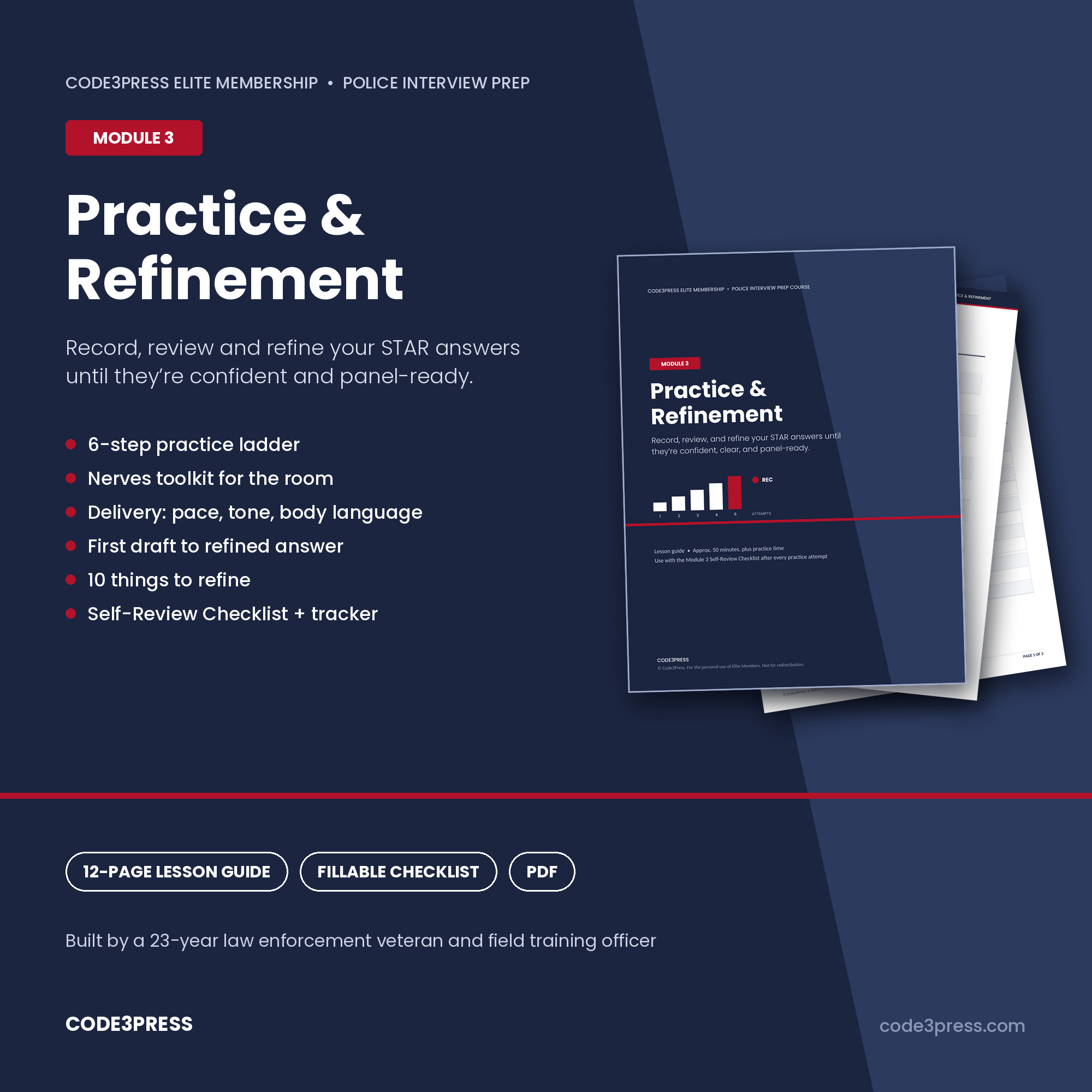
Record, review and refine your STAR answers until they’re confident, clear and panel-ready.
Learning STAR is one thing. Delivering it under pressure is another. Panels don’t score what’s on your page. They score what you say in the room, with three people watching and a clock running. Answers that read well on paper often fall apart out loud: they run long, lose their structure, or fill up with “um” and “like.” This module gives you a system to practise out loud, review your own performance, and polish every answer until it holds up in front of any panel.
What you’ll learn:
Structured practice: a six-step practice ladder that builds from reading aloud to a mock panel with follow-up questions, plus a two-week practice plan
Comfort under pressure: how to make practice feel like the real interview, and what to do when nerves hit, your mind goes blank, or you lose your place
Delivery skills: pace, tone, filler words, eye contact, posture and how to land a clean ending
Self-review in action: one conflict-resolution answer taken from a first draft that scores 2 to a refined answer that scores 5, with the review notes showing every change
10 things to refine: the specific fixes that move an answer up the rubric, worked on one at a time
Recording and feedback: a three-way method for reviewing your recordings, how to get useful feedback, and a clear standard for when an answer is panel-ready
What’s included:
Lesson guide (12 pages): six lessons, a scored before-and-after example, a six-question practice drill with follow-up probes, a knowledge check with answer key, and a one-page summary
Self-Review Checklist (3-page fillable PDF): an 11-point STAR check, a voice and body-language check, self and reviewer scoring, a “one fix” planner, an 8-attempt progress tracker and a panel-ready sign-off
Practice doesn’t make you sound scripted. It makes you sound prepared.