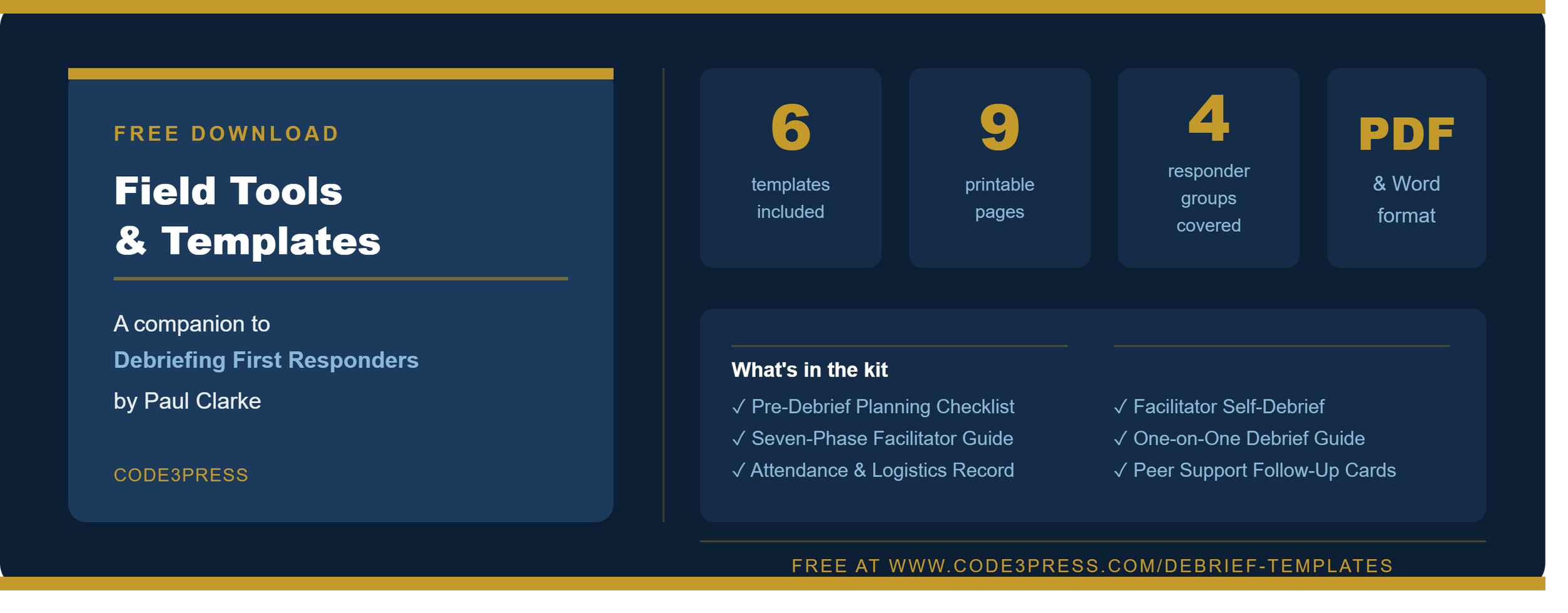
Product Description: Critical Incident Debriefing Framework – Facilitator’s Guide
Equip your agency with the definitive field manual for post-incident psychological recovery.
In the high-stakes world of first response, what happens after the sirens fade is just as critical as the call itself. The Code3Press Debriefing Framework is a professional, field-ready guide designed to help peer support leaders, supervisors, and mental health professionals facilitate structured, safe, and effective critical incident debriefs.
This comprehensive framework moves beyond simple "venting" sessions, providing a clinically-informed, 7-phase structure that normalizes stress reactions and builds long-term team resilience.
What’s Included:
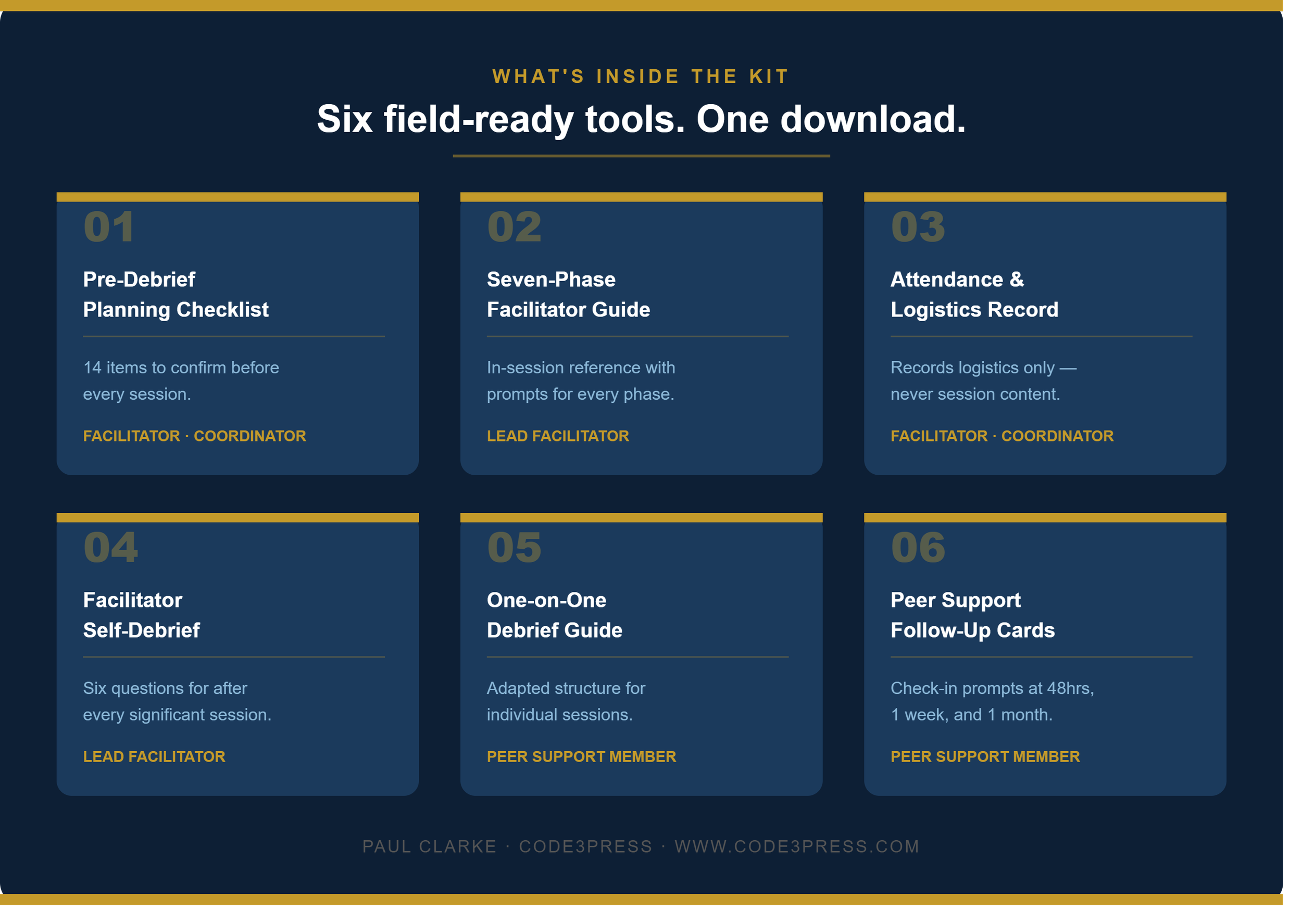
The 7-Phase Facilitator Guide: A step-by-step roadmap from Introduction to Re-entry, complete with exact sample prompts and scripts for every stage.
Facilitator Opening Statement: A pre-written script to immediately establish confidentiality, voluntary participation, and a "no-ranks" environment.
Pre-Debrief Planning Checklist: Ensure your logistics—timing, location, and triggers—are optimized for a successful session.
Managing Difficult Dynamics Cheat Sheet: Tactical scripts for handling "Angry" voices, dominant participants, finger-pointing, and "Fixers".
The "What vs. Why" Pro-Tip: Learn to ask questions that encourage reflection rather than making responders feel like they are under interrogation.
Post-Debrief Reflection Tool: A self-assessment guide to help facilitators plan follow-up care and manage their own secondary trauma.
Key Features:
Evidence-Based Structure: Grounded in proven psychological safety principles including respect for individual reactions and emotional safety.
Field-Tested Prompts: Dozens of targeted questions to help responders process everything from the "drip effect" of stress to the "human cost" of the job.
Operational Integration: Guidance on separating emotional debriefs from tactical reviews to protect your members and your agency.
Supervisor’s Guide – Post-Incident Check-Ins
Master the critical moments after the call with the essential leadership manual for first responder supervisors.
As a supervisor, you are the gatekeeper of your team’s emotional recovery. While you may not always lead the formal debriefing session, your actions determine whether your personnel feel supported or isolated in the aftermath of a crisis. The Code3Press Supervisor’s Guide provides a tactical, phase-based roadmap to help you navigate these high-stakes leadership responsibilities with confidence and empathy.
What’s Included:
Phase-Based Action Plan: Clear instructions for the critical windows of recovery, from the first 12 hours to long-term follow-up.
The "Handshake" Conversation: Learn how to conduct effective 20–45 minute informal "defusing" talks to stabilize your crew before they go home.
Formal Debrief Coordination: Guidelines on when to initiate a formal session (24–72 hours) and how to protect the psychological safety of the environment.
Leadership Scripts: Proven language for 1-on-1 check-ins, establishing boundaries, and normalizing the debriefing process.
Supervisor’s Do’s and Don’ts: A quick-reference table to ensure you are respecting confidentiality and modeling healthy vulnerability without overstepping into managerial or investigative roles.
First Responder Wellness Resource Sheet: A ready-to-distribute handout for your team covering common trauma reactions, self-care "reset" tactics, and national crisis resources.
Key Features:
Recognition of High-Risk Triggers: Specific guidance on identifying calls that require immediate intervention, such as pediatric deaths, line-of-duty injuries, and mass casualty events.
Symptom Identification: Tools to help you spot acute stress, "drip effect" cumulative trauma, and red flags like suicidal ideation or reckless behavior.
Operational Integration: Strategies to stick to basic routines—exercise, hydration, and nutrition—to help your team regulate their systems after high-intensity shifts.
Leadership doesn't end when the scene is cleared. Give your supervisors the tools to protect their most valuable asset: their people.