 Image 1 of 1
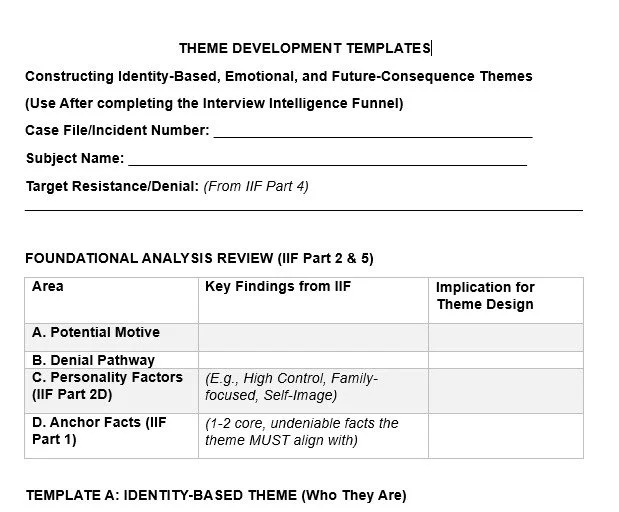
This download provides three distinct, fillable frameworks to craft themes that reduce resistance and lower the barrier to admission:
Template A: Identity-Based Themes (The "Who They Are" Approach) Learn to separate the suspect’s core identity from their regretful behavior. This template helps you identify positive traits (e.g., "Good Parent," "Hard Worker") and craft a "pivot phrase" that allows the subject to save face while admitting guilt.
Template B: Emotional & Responsibility-Shift Themes (The "Why It Happened" Approach) Stop asking "did you do it" and start asking "what pressure were you under?" This template helps you connect a primary emotion (fear, anger, desperation) to an external pressure factor, creating a narrative bridge that makes the action understandable—without excusing it.
Template C: Future-Consequence Themes (The "What Happens Next" Approach) Move the suspect out of the past and into the reality of their future. This framework helps you clearly define the consequences of denial versus the mitigation of cooperation , empowering the subject to make an immediate, rational choice.
Why You Need This Tool: Every template includes a "Theme Test" checkpoint to ensure your script reduces shame and offers an ethical explanation before you ever step inside the interview room. Stop improvising your themes. Build them with precision
This download provides three distinct, fillable frameworks to craft themes that reduce resistance and lower the barrier to admission:
Template A: Identity-Based Themes (The "Who They Are" Approach) Learn to separate the suspect’s core identity from their regretful behavior. This template helps you identify positive traits (e.g., "Good Parent," "Hard Worker") and craft a "pivot phrase" that allows the subject to save face while admitting guilt.
Template B: Emotional & Responsibility-Shift Themes (The "Why It Happened" Approach) Stop asking "did you do it" and start asking "what pressure were you under?" This template helps you connect a primary emotion (fear, anger, desperation) to an external pressure factor, creating a narrative bridge that makes the action understandable—without excusing it.
Template C: Future-Consequence Themes (The "What Happens Next" Approach) Move the suspect out of the past and into the reality of their future. This framework helps you clearly define the consequences of denial versus the mitigation of cooperation , empowering the subject to make an immediate, rational choice.
Why You Need This Tool: Every template includes a "Theme Test" checkpoint to ensure your script reduces shame and offers an ethical explanation before you ever step inside the interview room. Stop improvising your themes. Build them with precision