 Image 1 of 3
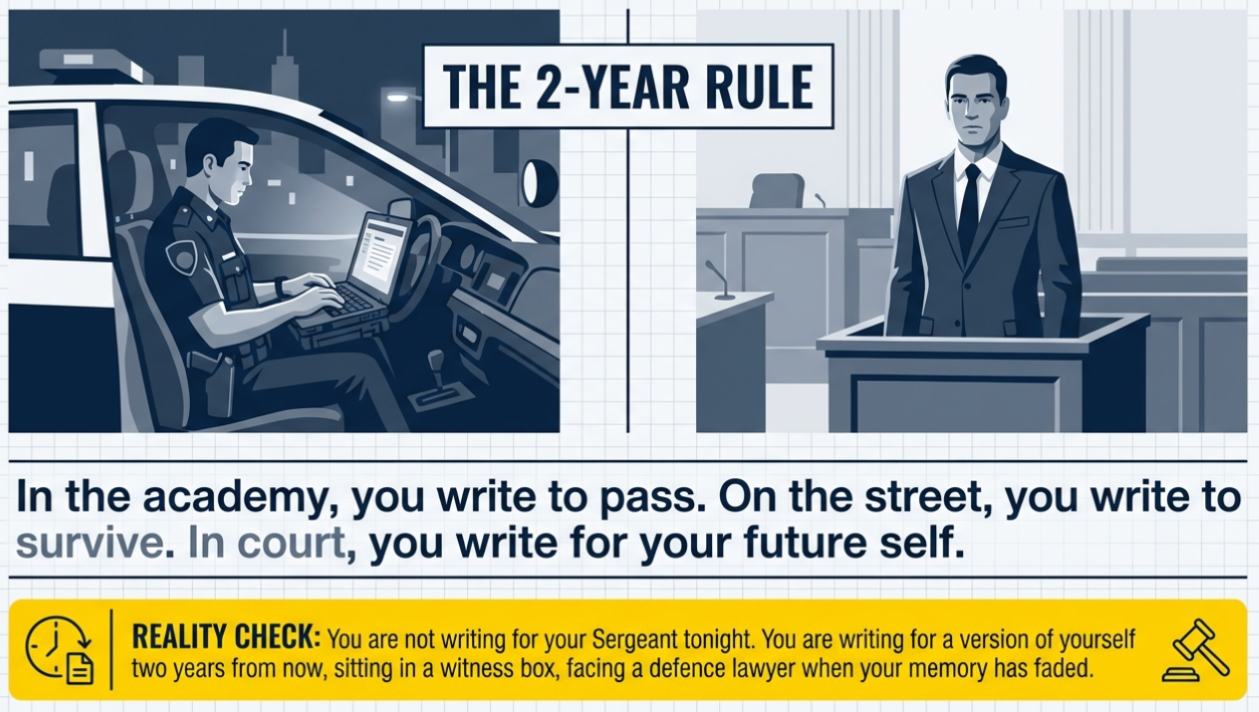 Image 2 of 3
 Image 3 of 3
Stop letting defense lawyers shred your hard work in the witness box.
In the academy, you’re taught how to write a report. On the street, you learn how to survive. But in the courtroom, you learn the 2-Year Rule: You aren't writing for your Sergeant tonight—you are writing for a version of yourself two years from now, sitting in a witness box, being grilled by a defense lawyer while your memory of a "routine" call has completely faded.
The 5-Minute Articulation Framework is a high-impact, 5-page digital guide designed specifically for Canadian recruits and patrol officers who want to turn "gut feelings" into bulletproof legal articulation. Whether you are dealing with a standard shoplifting arrest or a high-stakes search, this framework ensures your Reasonable and Probable Grounds (RPG) are both subjective and objective enough to stand up in any Canadian court.
The 2-Year Rule Strategy: Learn how to use "Sensory Anchors" and the "Vividness Test" to ensure your notes act as a flawless memory refresh years after the incident.
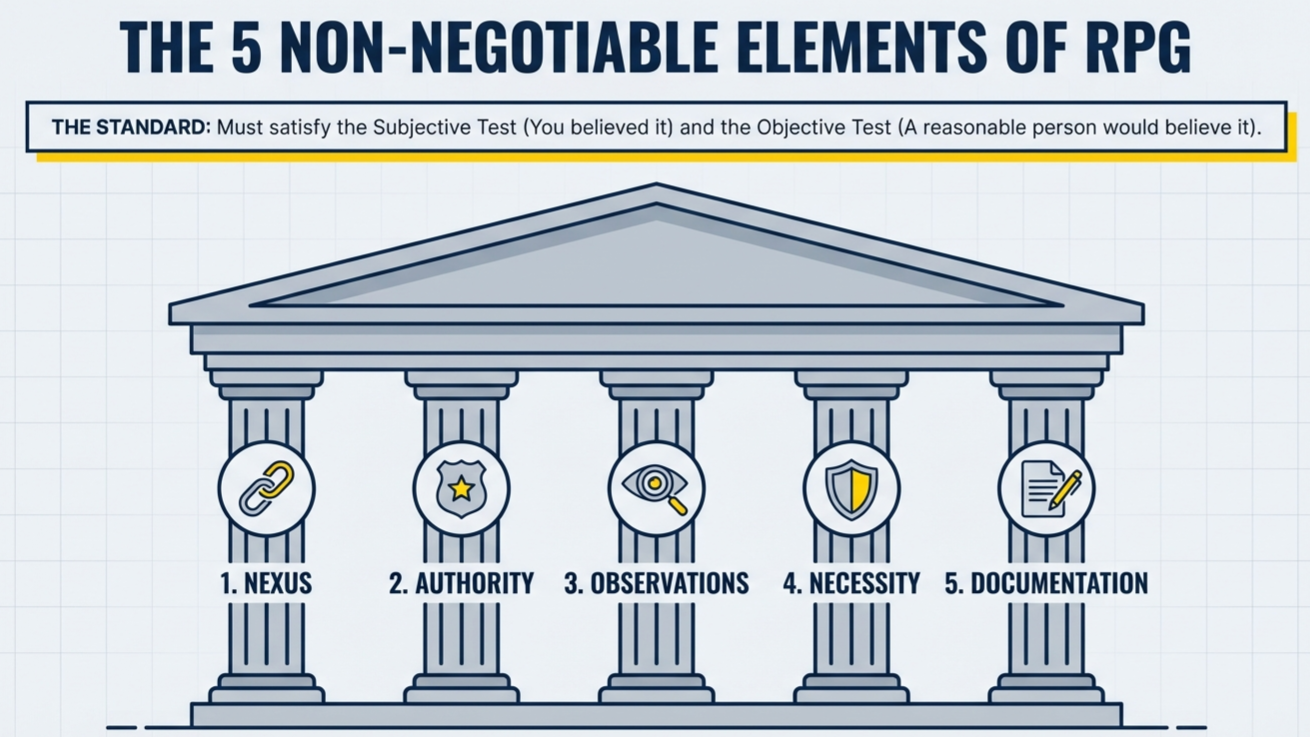
The 5-Point RPG Checklist: A non-negotiable list of elements—Nexus, Authority, Observations, Knowledge, and Necessity—that every arrest report must contain.
Evidence Linking Table: A visual guide to bridging the gap between what you saw (The Fact), your training (The Inference), and the Law.
10 Tactical Power Verbs: Stop using vague language like "suspicious" or "nervous." Use precision vocabulary like Sighted, Directed, and Apprehended to create courtroom certainty.
A "Real-World" Case Study: Compare a standard "Rookie Note" against a "Code 3 Press" professional note for a shoplifting arrest to see exactly how to apply these tools on shift.
Field Reference Checklist: A mobile-friendly checklist designed to be screenshotted and kept in your digital notes for on-scene reference.
Stop letting defense lawyers shred your hard work in the witness box.
In the academy, you’re taught how to write a report. On the street, you learn how to survive. But in the courtroom, you learn the 2-Year Rule: You aren't writing for your Sergeant tonight—you are writing for a version of yourself two years from now, sitting in a witness box, being grilled by a defense lawyer while your memory of a "routine" call has completely faded.
The 5-Minute Articulation Framework is a high-impact, 5-page digital guide designed specifically for Canadian recruits and patrol officers who want to turn "gut feelings" into bulletproof legal articulation. Whether you are dealing with a standard shoplifting arrest or a high-stakes search, this framework ensures your Reasonable and Probable Grounds (RPG) are both subjective and objective enough to stand up in any Canadian court.
The 2-Year Rule Strategy: Learn how to use "Sensory Anchors" and the "Vividness Test" to ensure your notes act as a flawless memory refresh years after the incident.
The 5-Point RPG Checklist: A non-negotiable list of elements—Nexus, Authority, Observations, Knowledge, and Necessity—that every arrest report must contain.
Evidence Linking Table: A visual guide to bridging the gap between what you saw (The Fact), your training (The Inference), and the Law.
10 Tactical Power Verbs: Stop using vague language like "suspicious" or "nervous." Use precision vocabulary like Sighted, Directed, and Apprehended to create courtroom certainty.
A "Real-World" Case Study: Compare a standard "Rookie Note" against a "Code 3 Press" professional note for a shoplifting arrest to see exactly how to apply these tools on shift.
Field Reference Checklist: A mobile-friendly checklist designed to be screenshotted and kept in your digital notes for on-scene reference.